EE 445S Real-Time Digital Signal Processing Laboratory - Lecture 6
Lecture by Prof. Brian Evans
Before Lecture
- Arcade Fire,
"The Suburbs",
Live from Bonnaroo, 2011.
Arcade Fire won a 2011 Grammy Award for Best Album of the Year for The Suburbs.
- Wes Montgomery,
"Full House", 1962.
- "Drunken Angel",
Lucinda Williams, Austin City Limits, October 1989.
Note: Lucinda Williams played at the 2011 South by Southwest
Music Festival in Austin.
She has won three Grammy Awards: Best Country Song,
Best Contempory Folk Album and Best Female Rock Vocal Performance.
She lived in Austin from 1973 to 1978.
- Cake,
"The Distance",
1996.
(MP3 Clip)
- "Carmina Burana",
UC Davis University Chorus, Alumni Chorus, Symphony Orchestra, and
the Pacific Boychoir, June 2007.
Announcements
- "National Instruments to add 1,000 jobs at Austin headquarters",
Feb. 21, 2013.
- "PlayStation 4 console announced by Sony in New York",
BBC, Feb. 20, 2013.
- "GM still lists dozens of Austin tech jobs",
Austin Business Journal, Jan. 2, 2013.
Hundreds of openings at the new GM Innovation Center in Round Rock, Texas.
- "Austin No. 3 for most jobs gained since recession",
Austin Business Journal, Feb. 7, 2012.
- "Stanford gurus enable two-way radio
communications",
Feb. 18, 2011.
- "Music therapy
'may help cut tinnitus noise levels'",
BBC News, December 29, 2009.
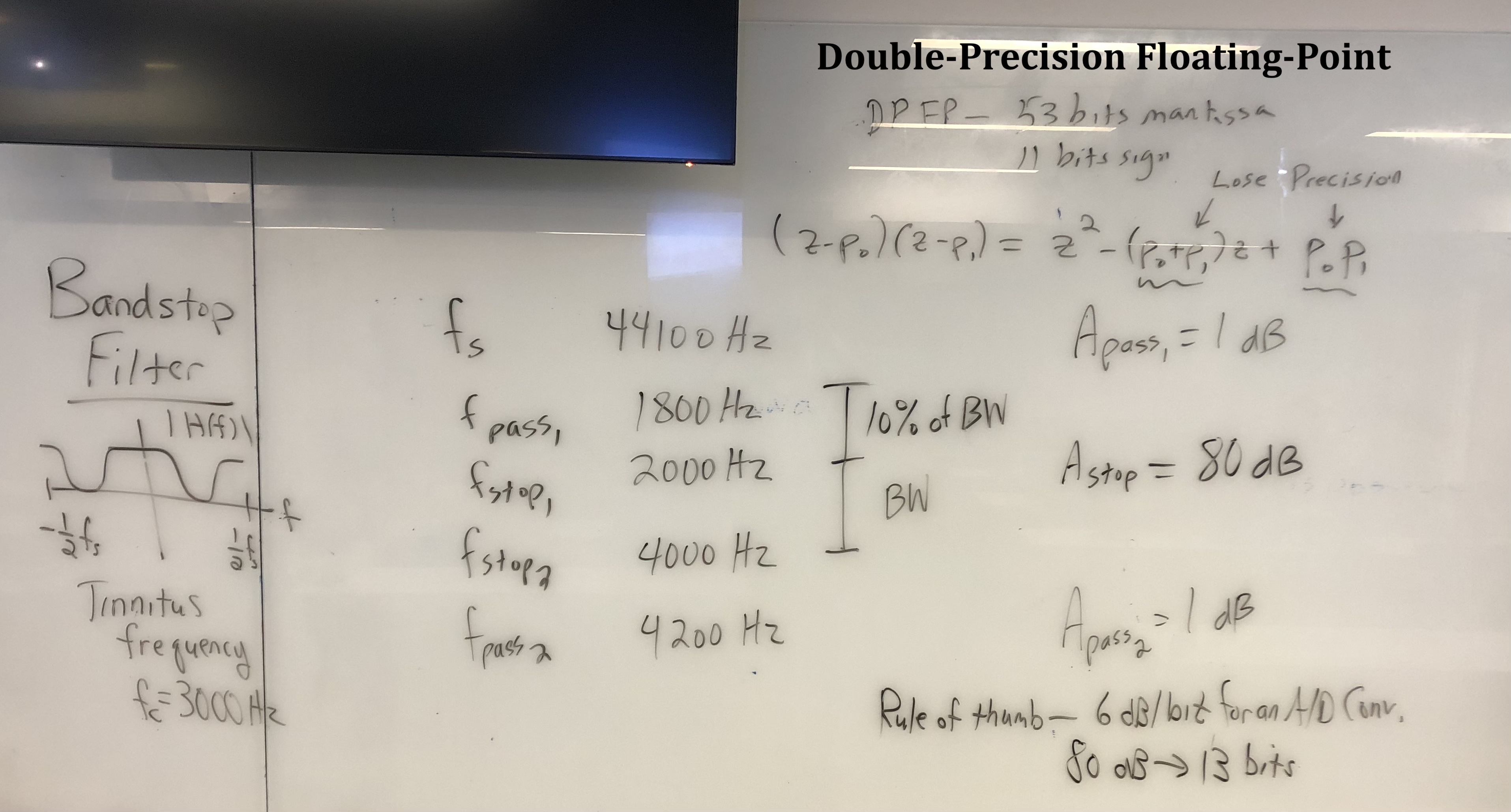
Tinnitus is more commonly known as "ringing of the ears".
The proposed treatment is to alter "participants' favourite music to
remove notes that match the frequency of the ringing in their ears."
Good application for notch filters.
Pete Townshend, lead guitarist for The Who, suffers from
tinnitus.
- From the backcover of the Johnson & Sethares
Telecommunication Breakdown:
Albert Einstein, when asked to describe radio, replied:
"You see, wire telegraph is a kind of a very, very long cat.
You pull his tail in New York and his head is meowing in Los Angeles.
Do you understand this?
And radio operates exactly the same way: you send signals here, they
receive them there.
The only difference is that there is no cat."
Cartoon link
sent by a Fall 2006 real-time DSP student.
Lecture
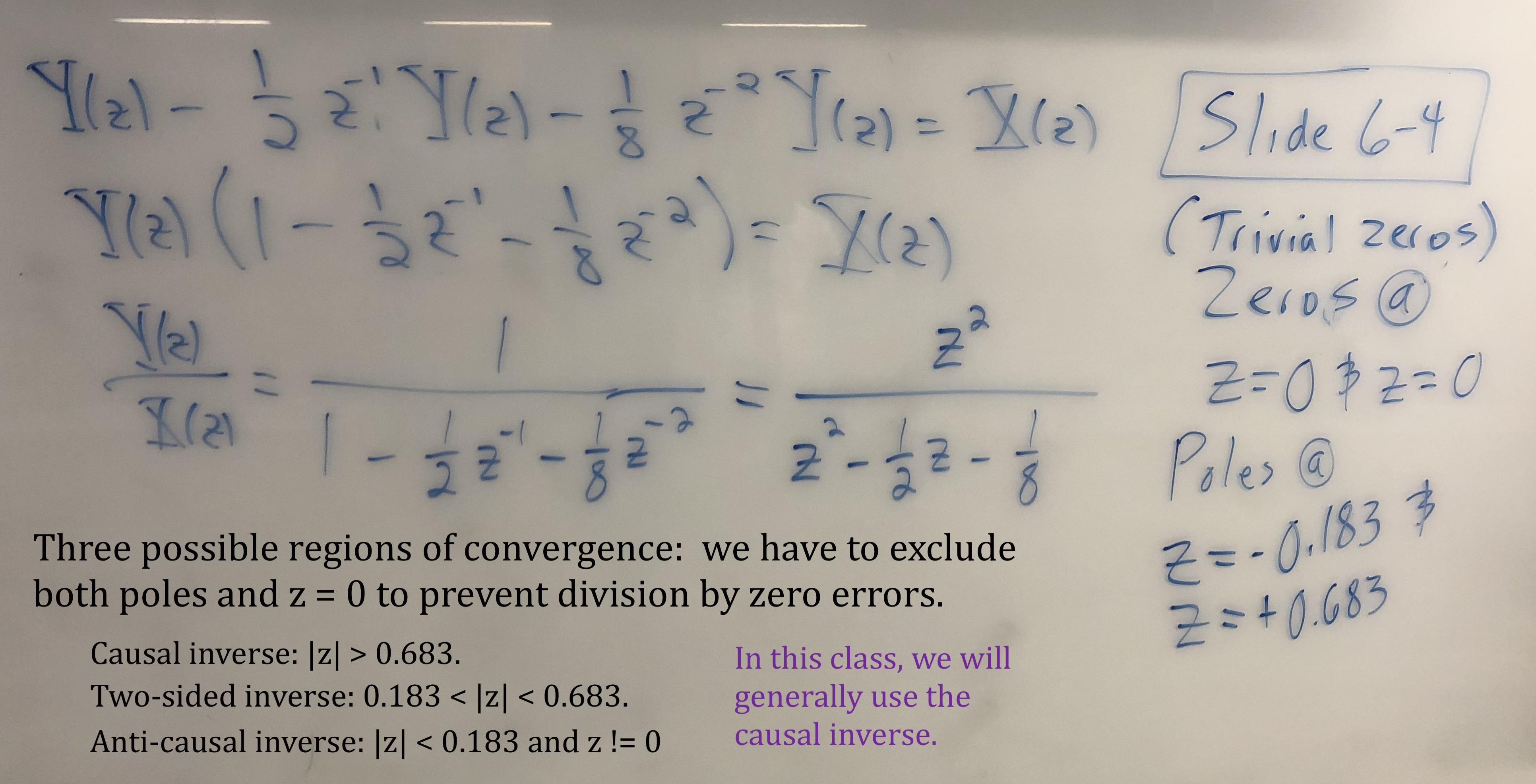
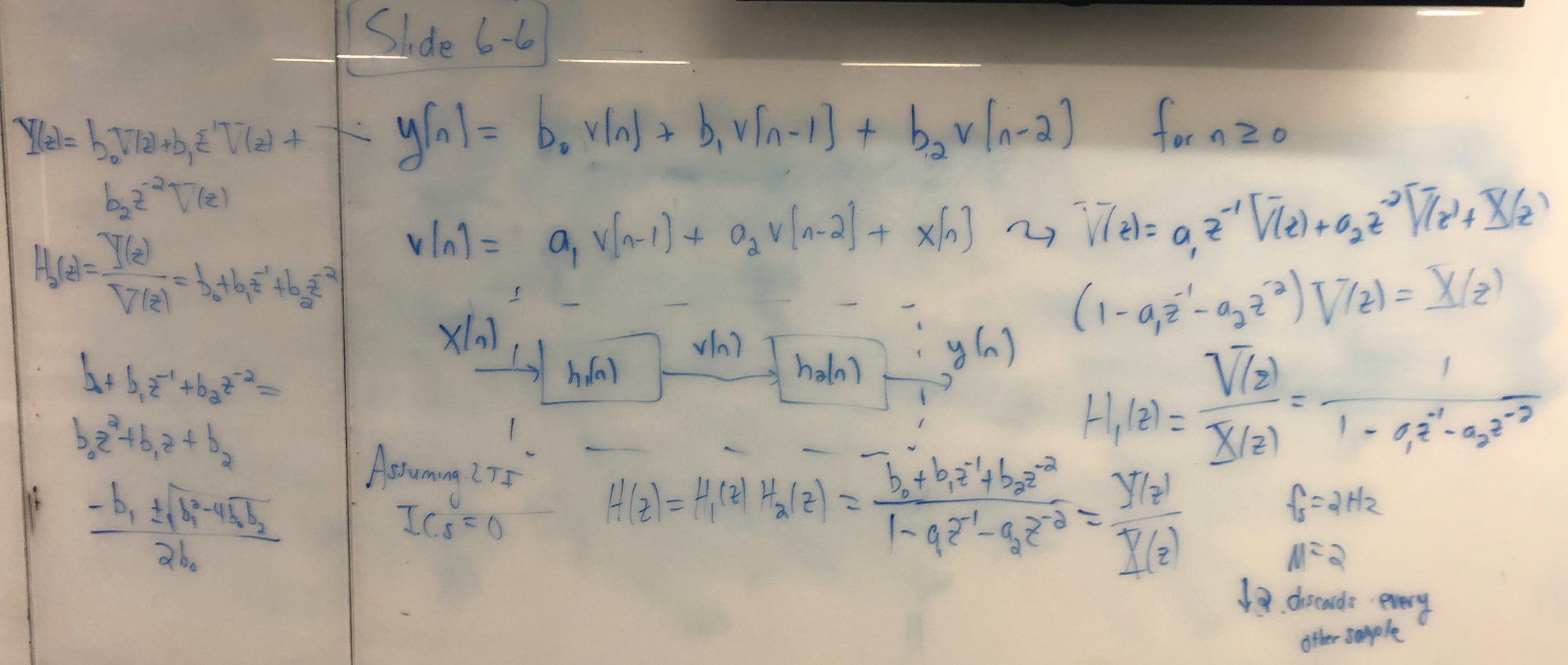
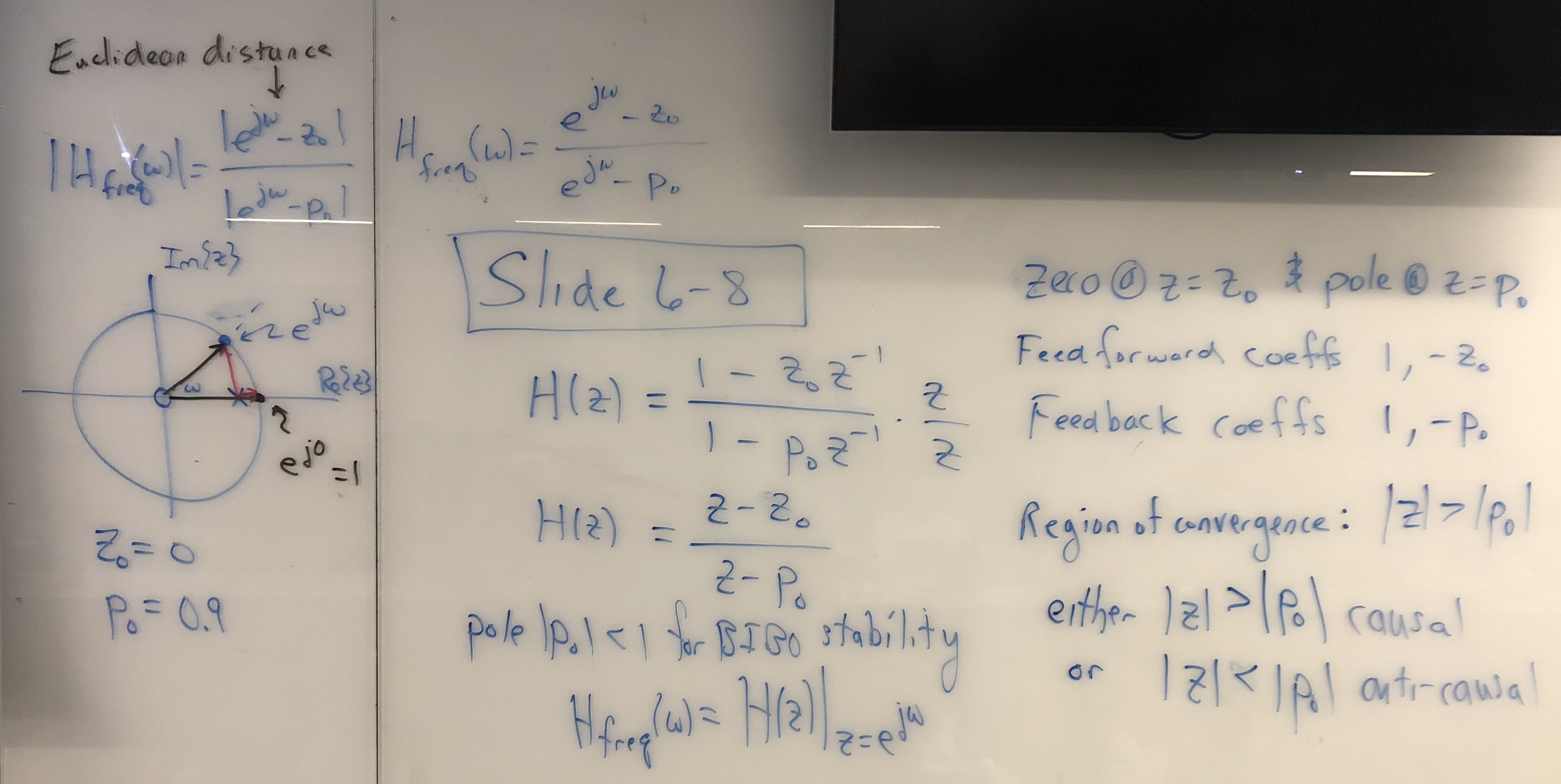
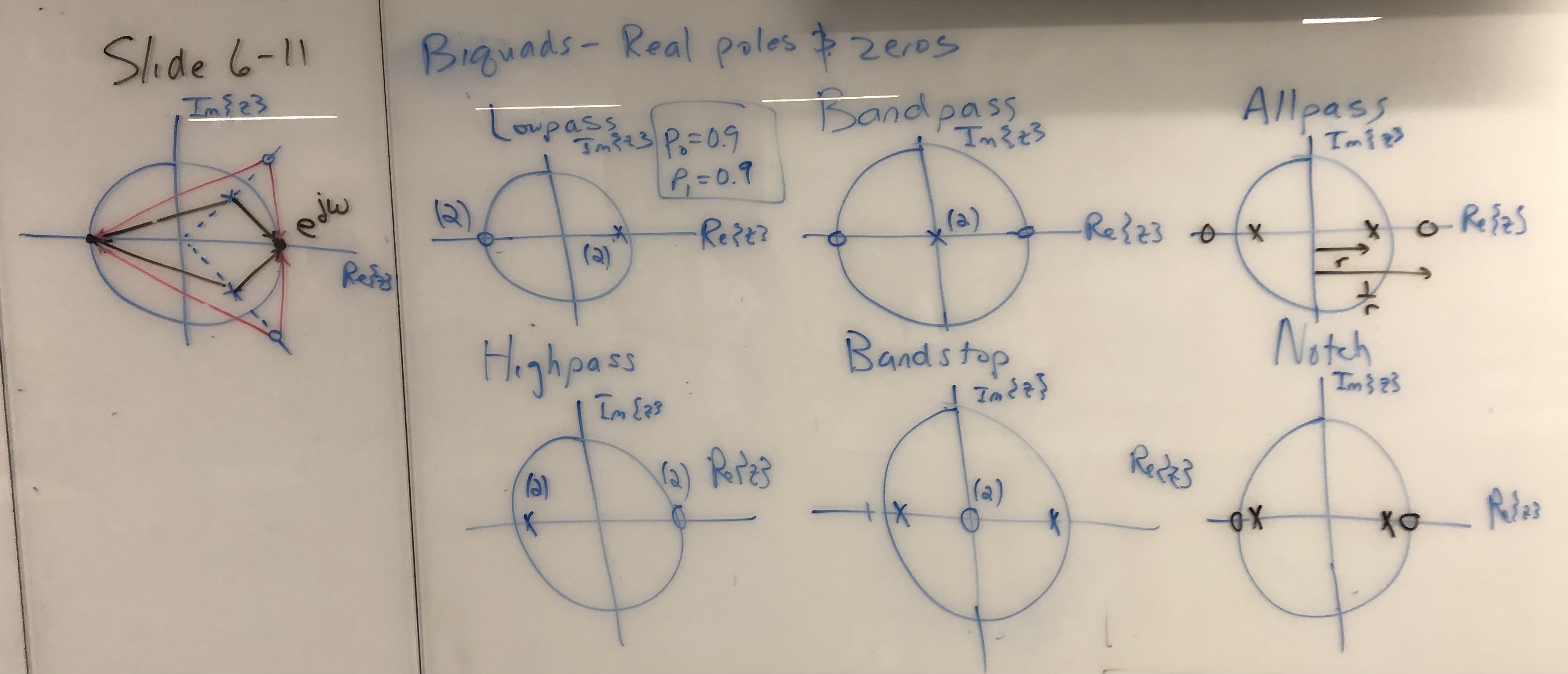
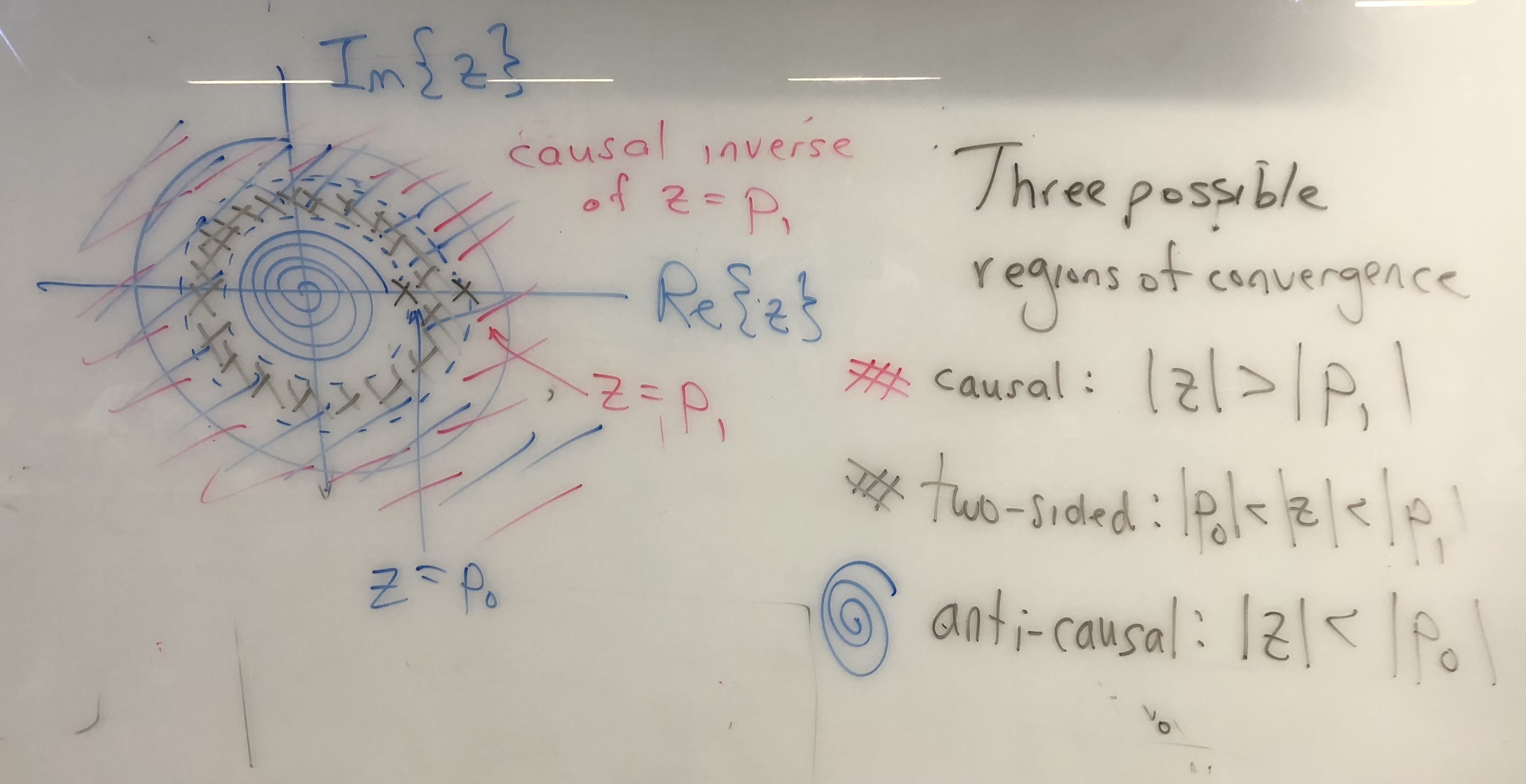
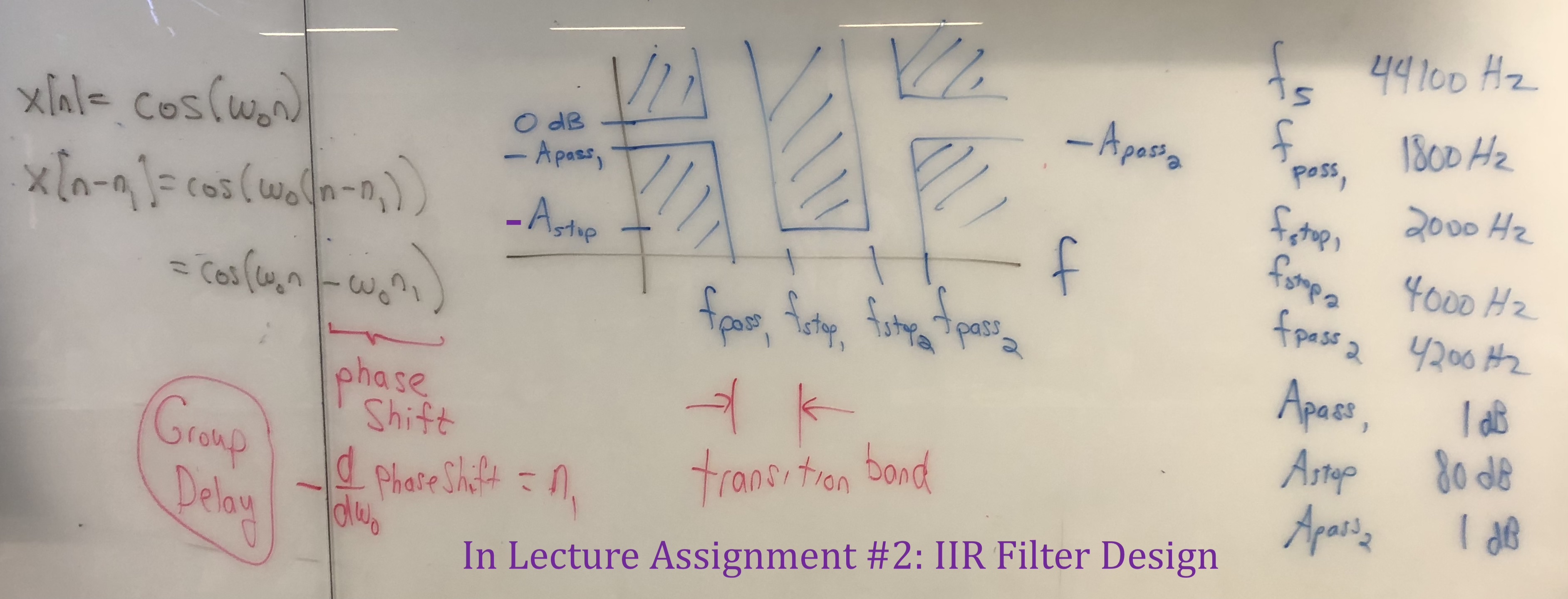
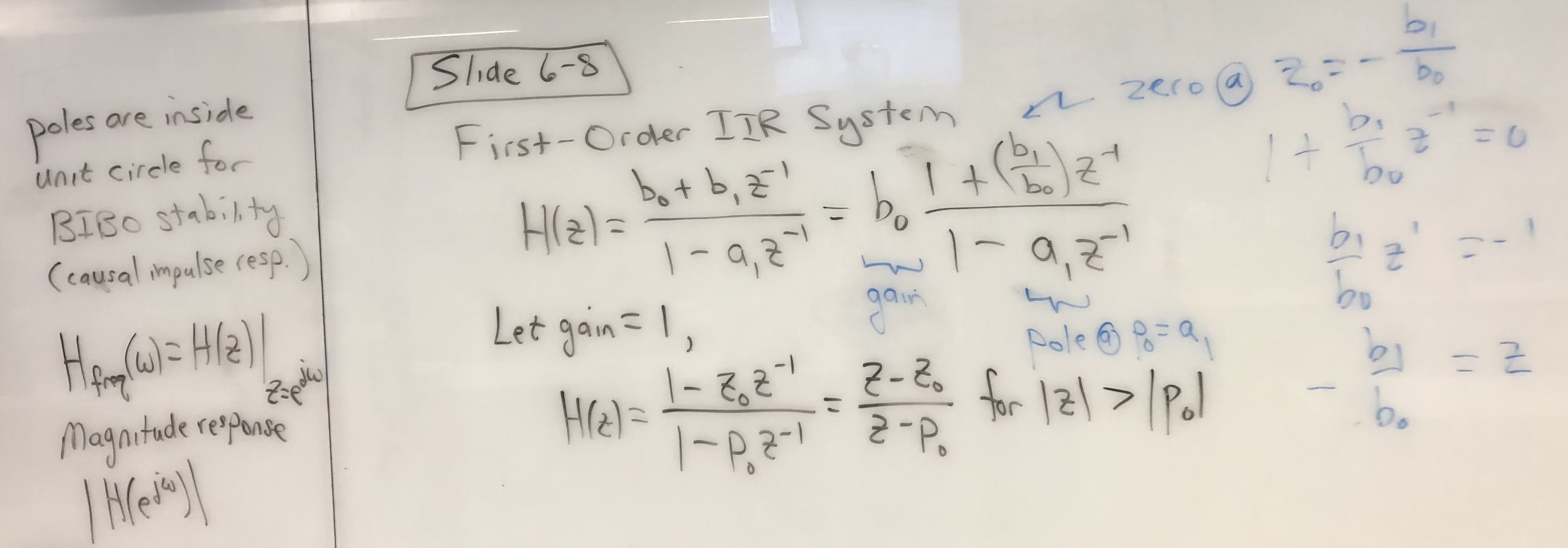
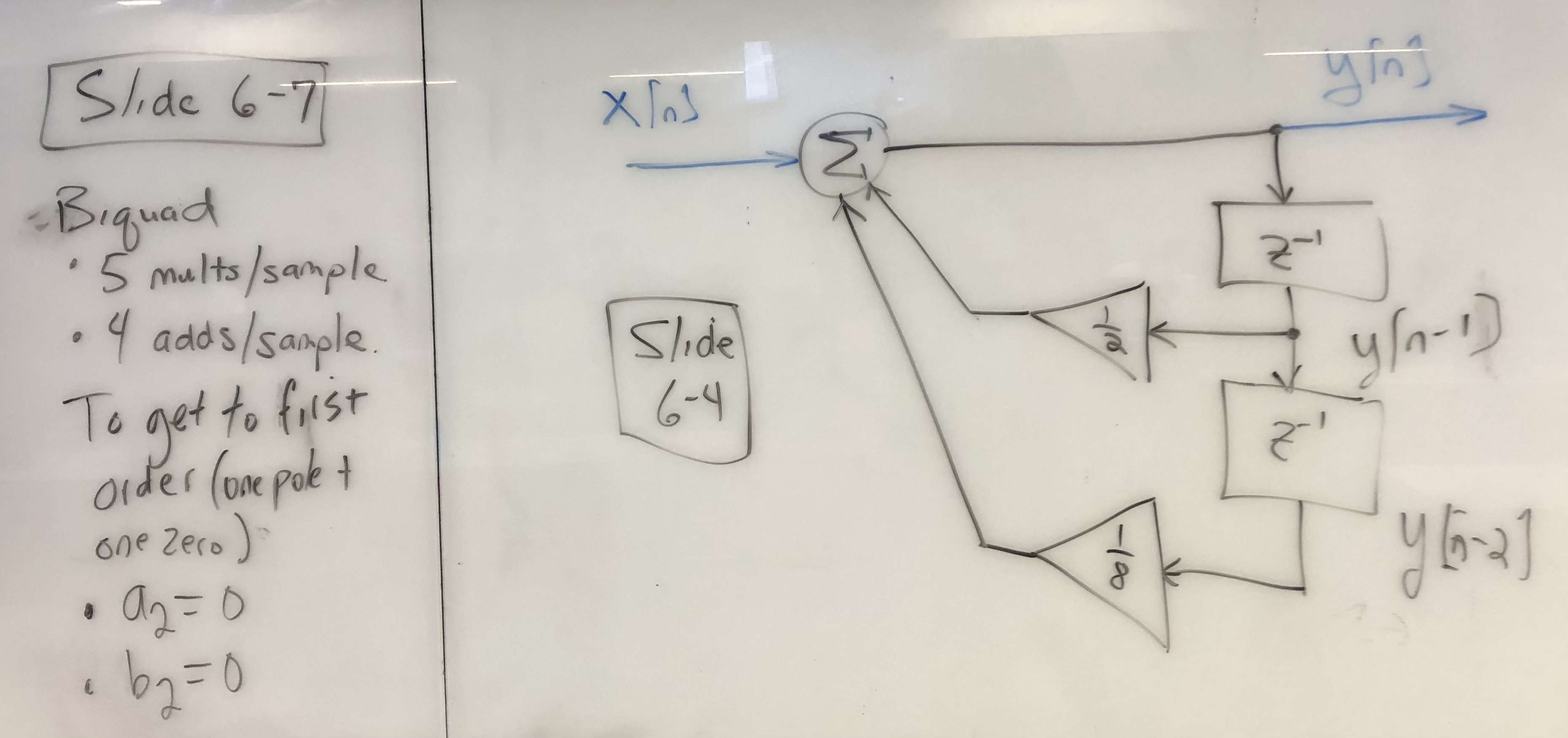
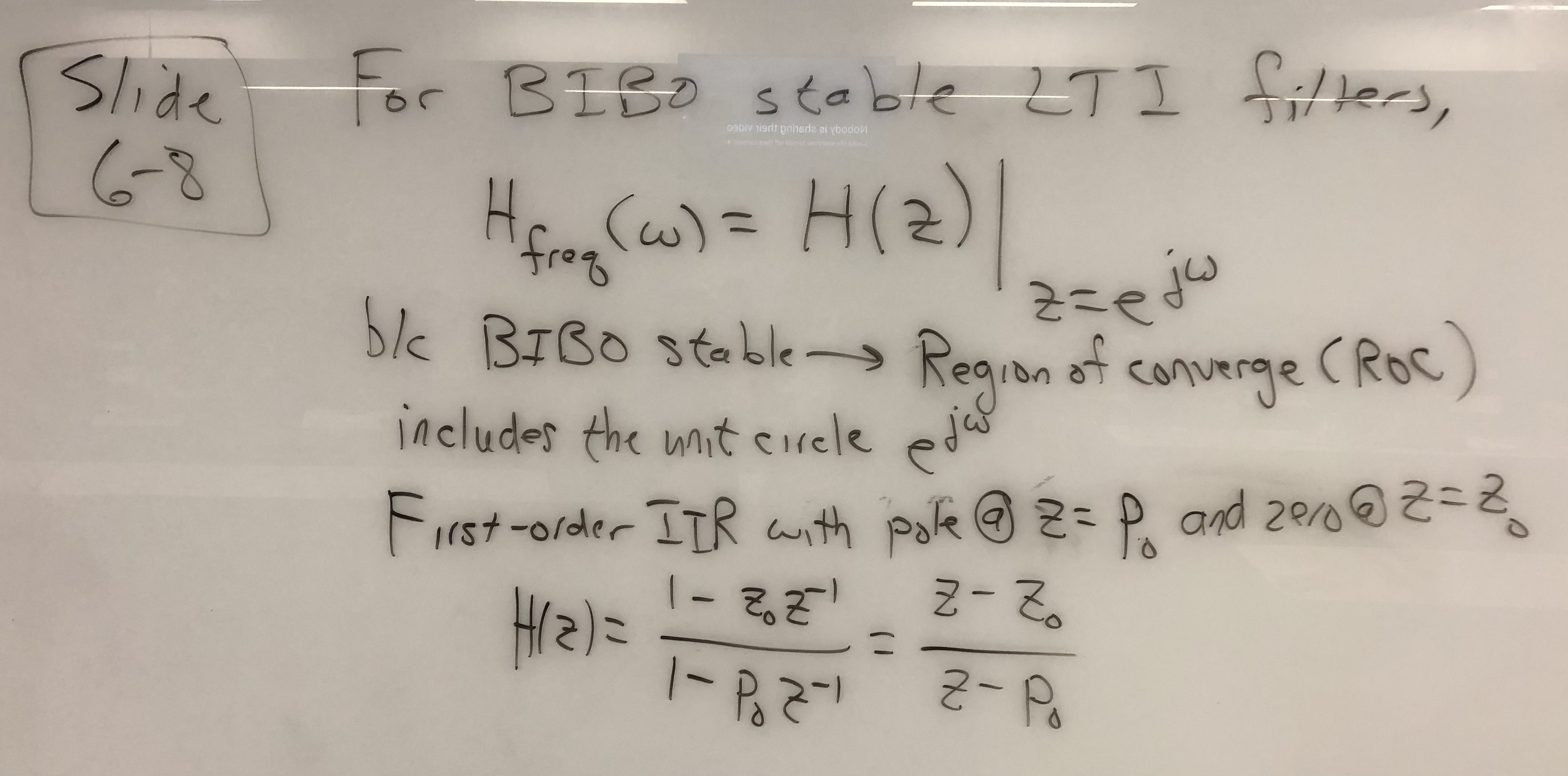
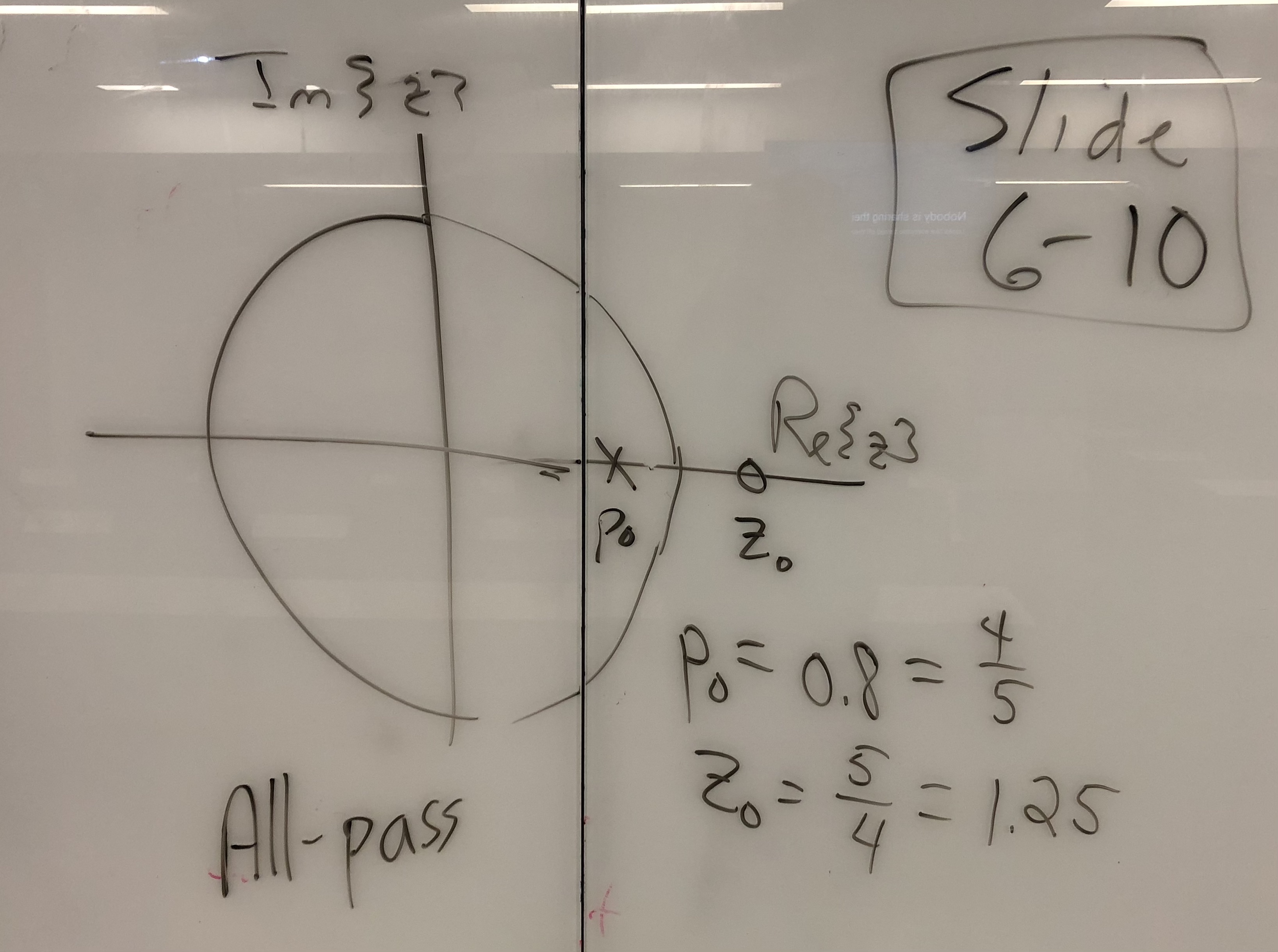
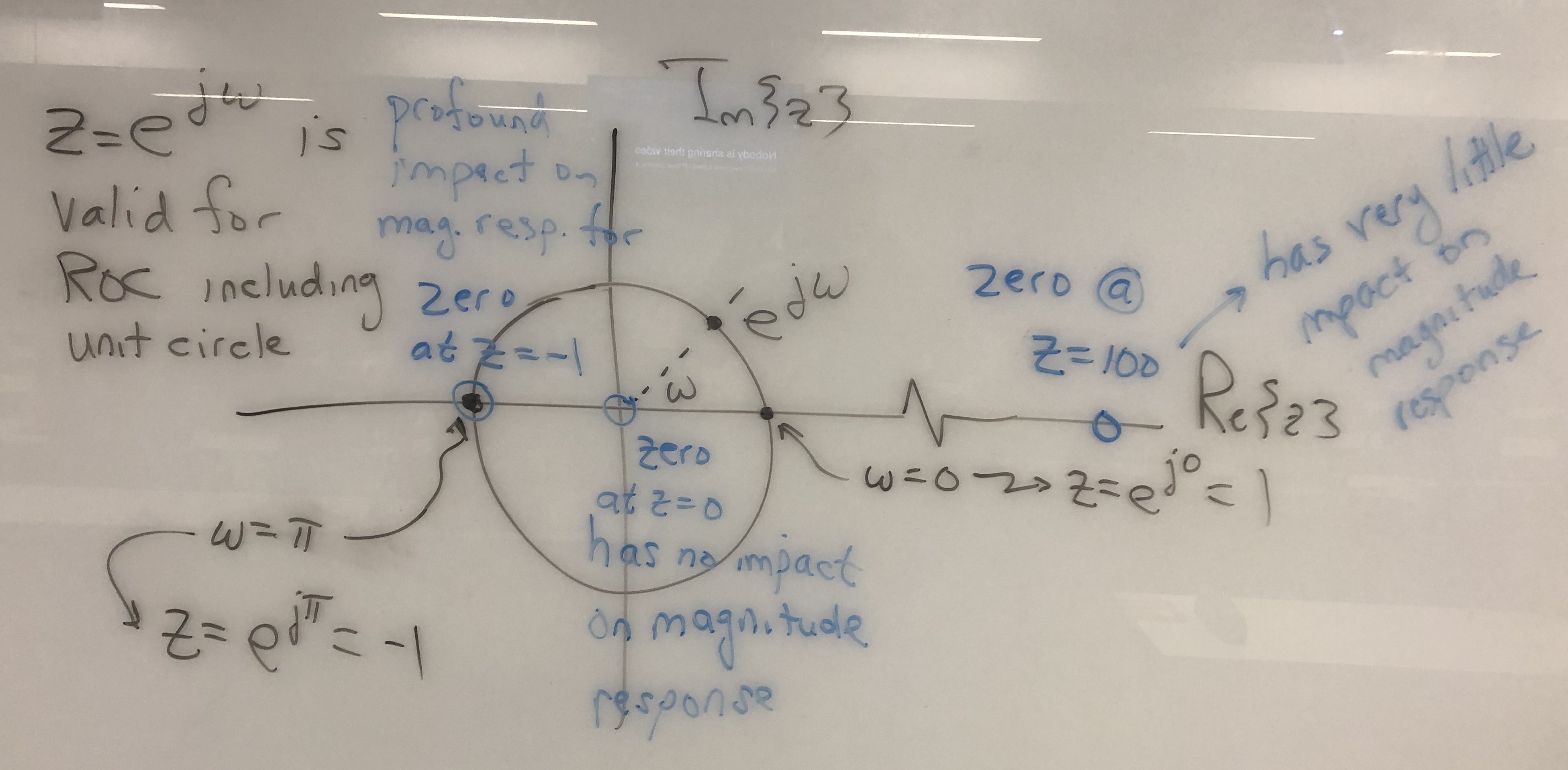
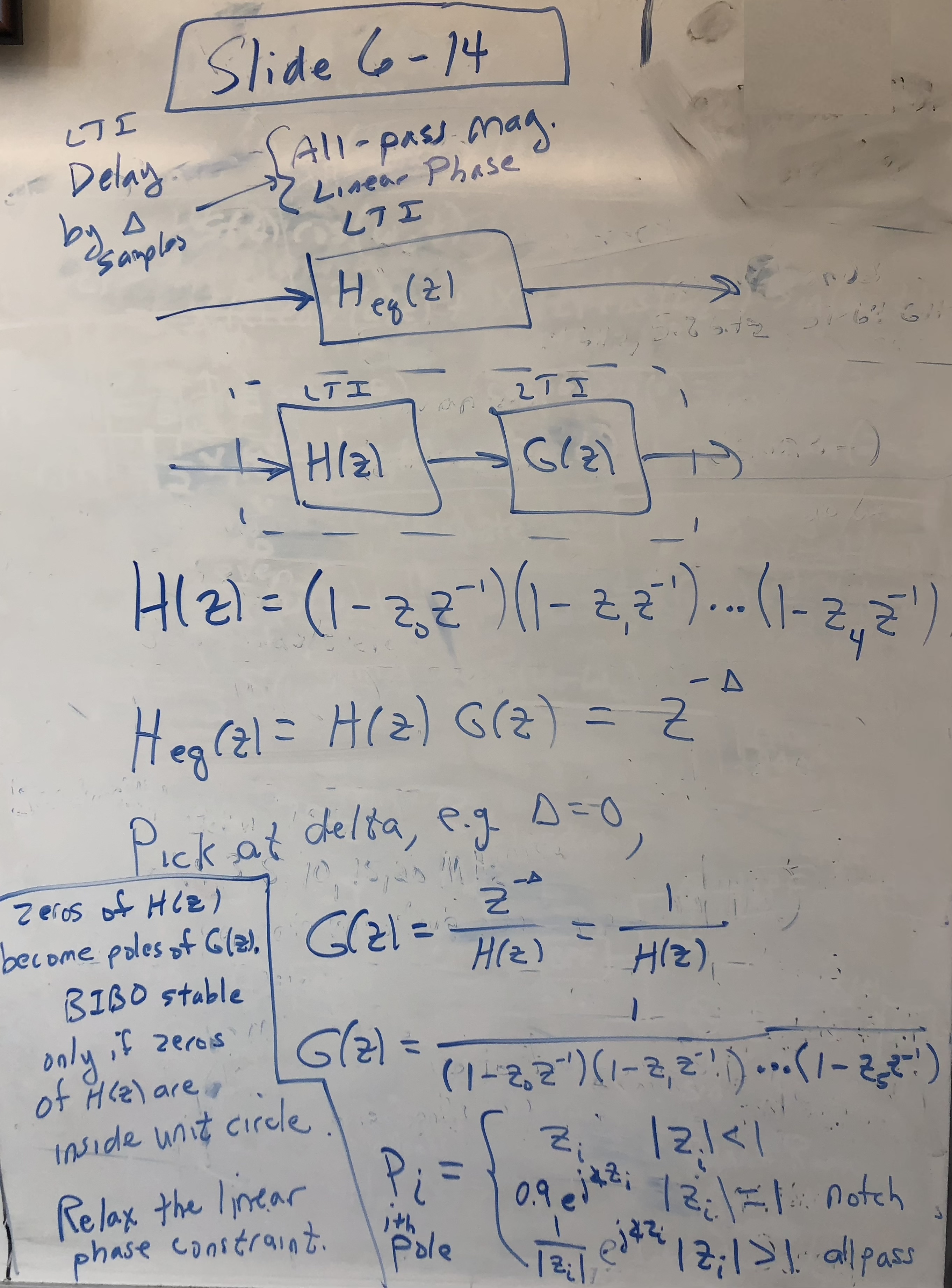
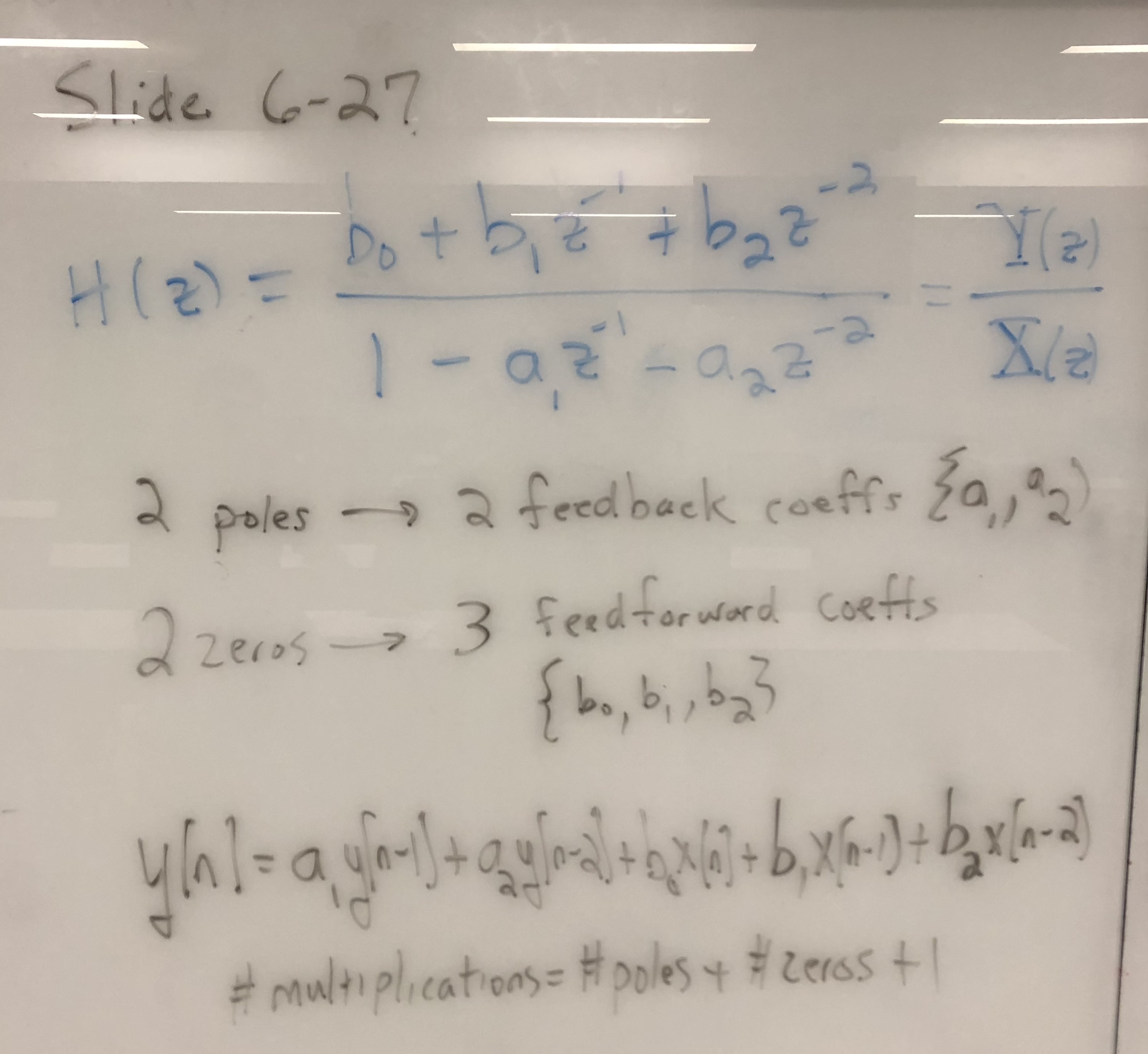
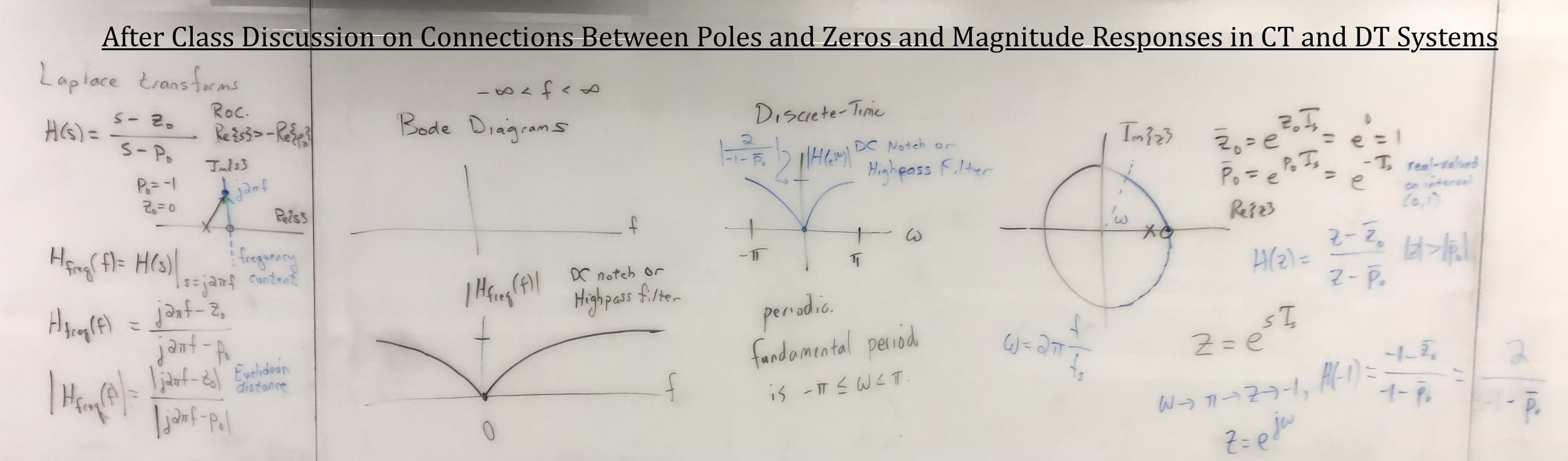
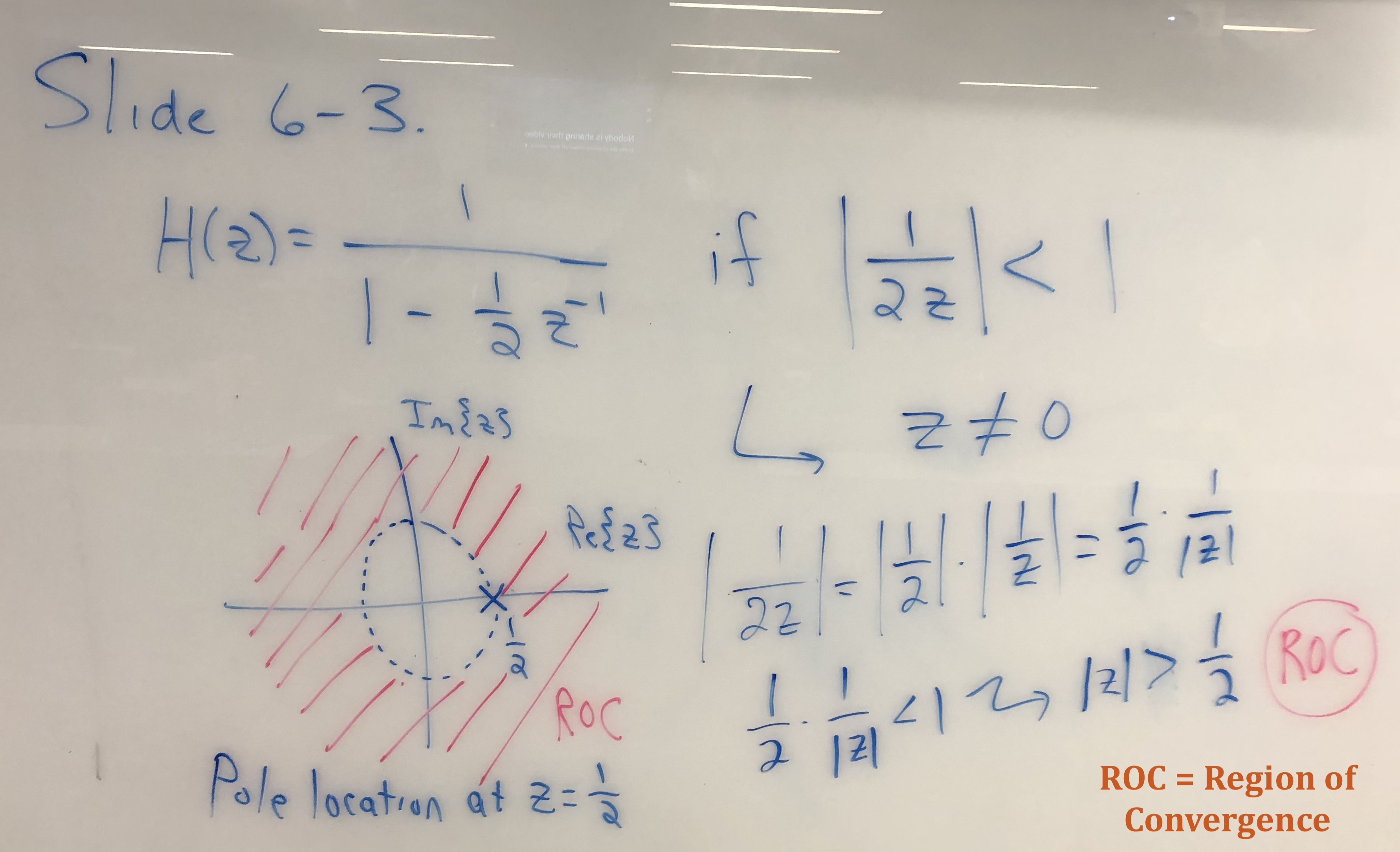
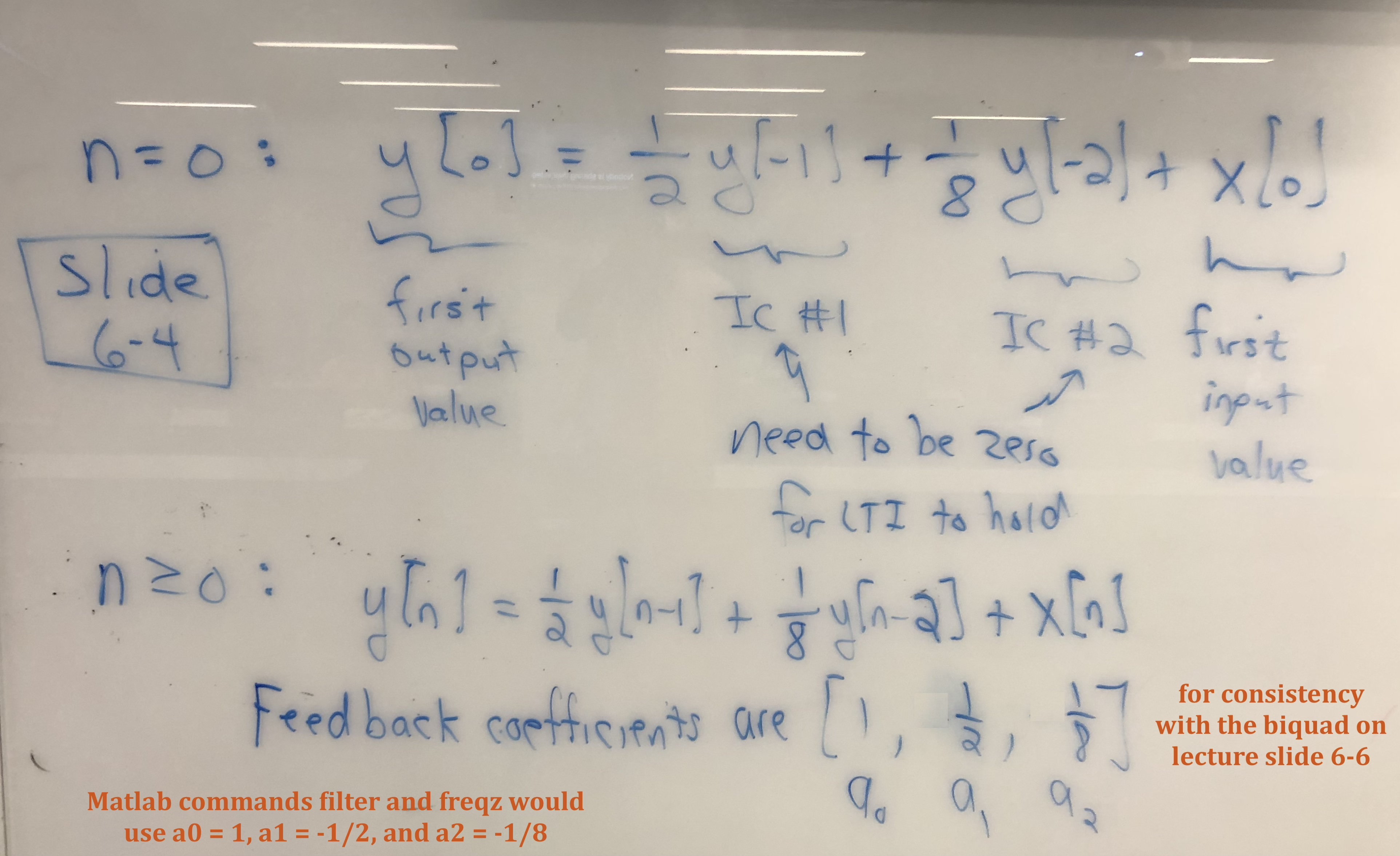
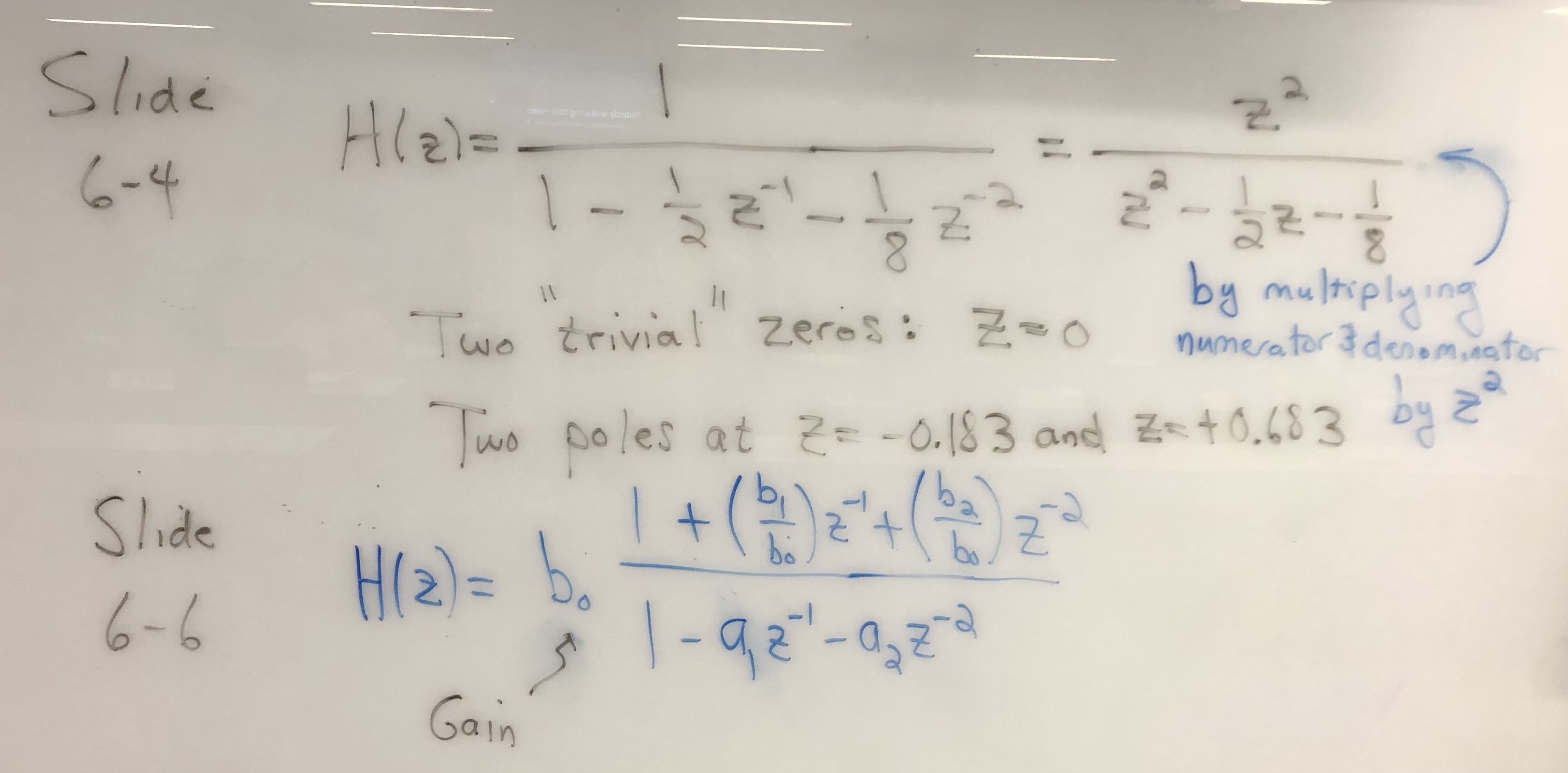
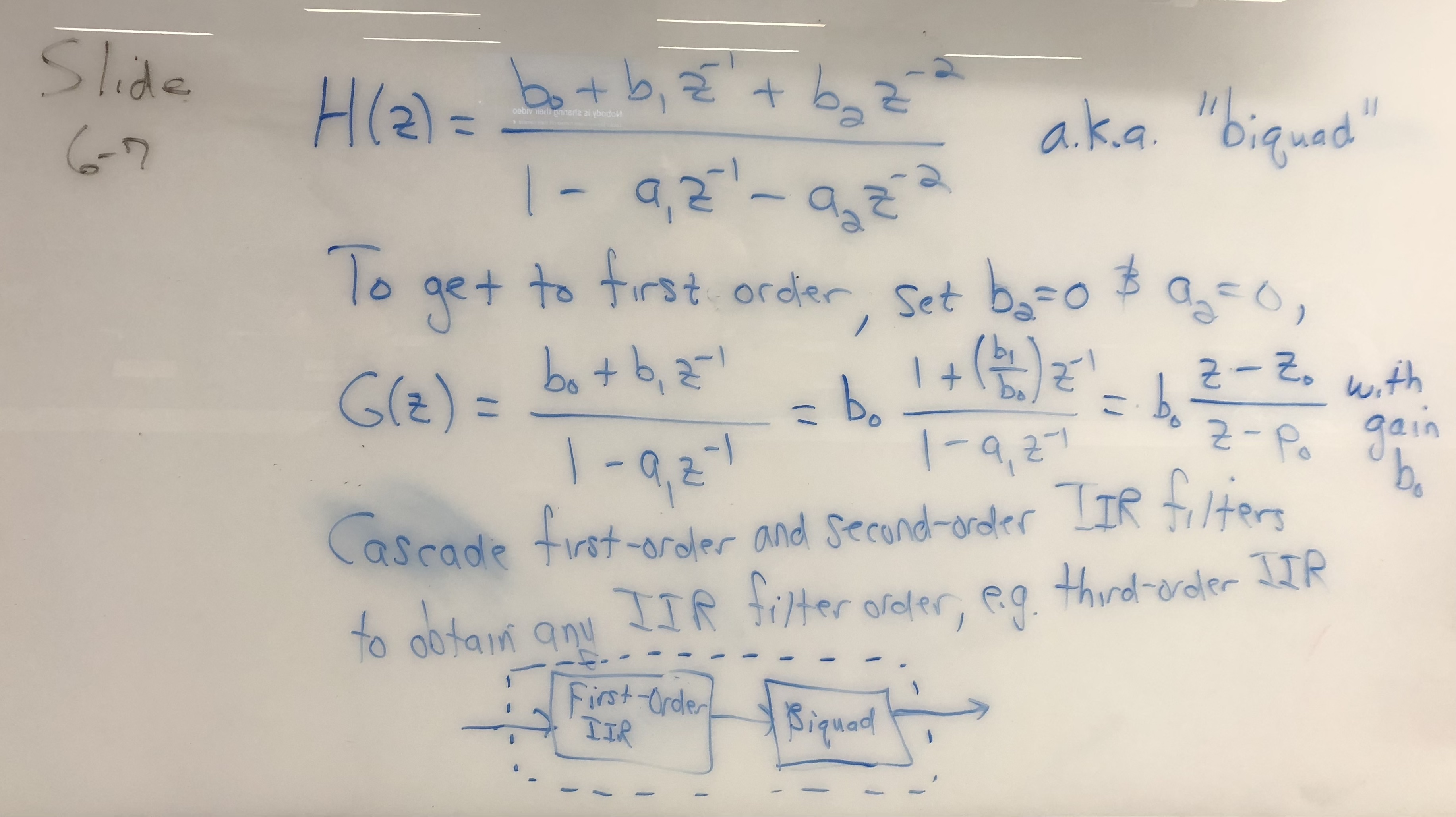
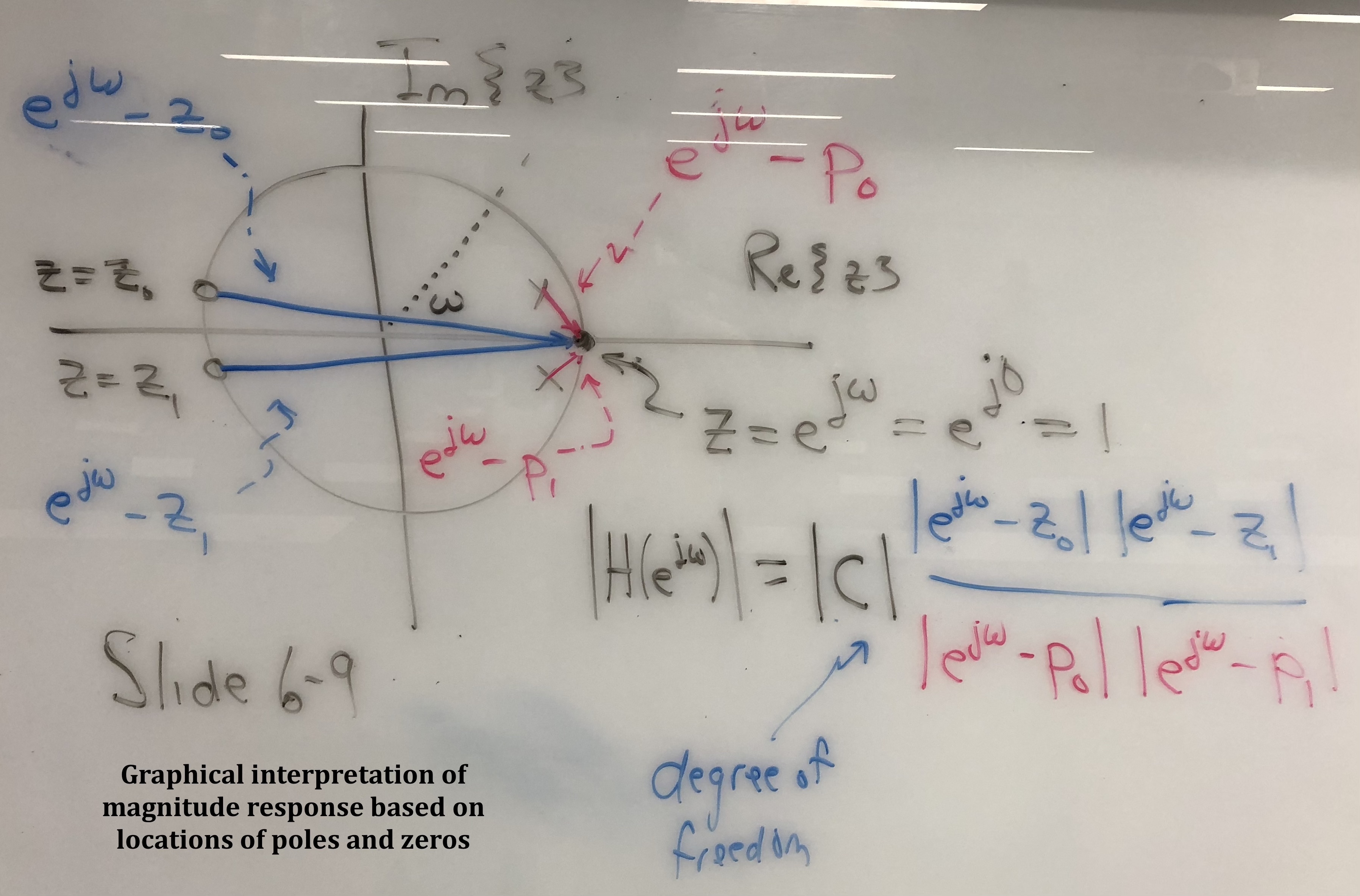
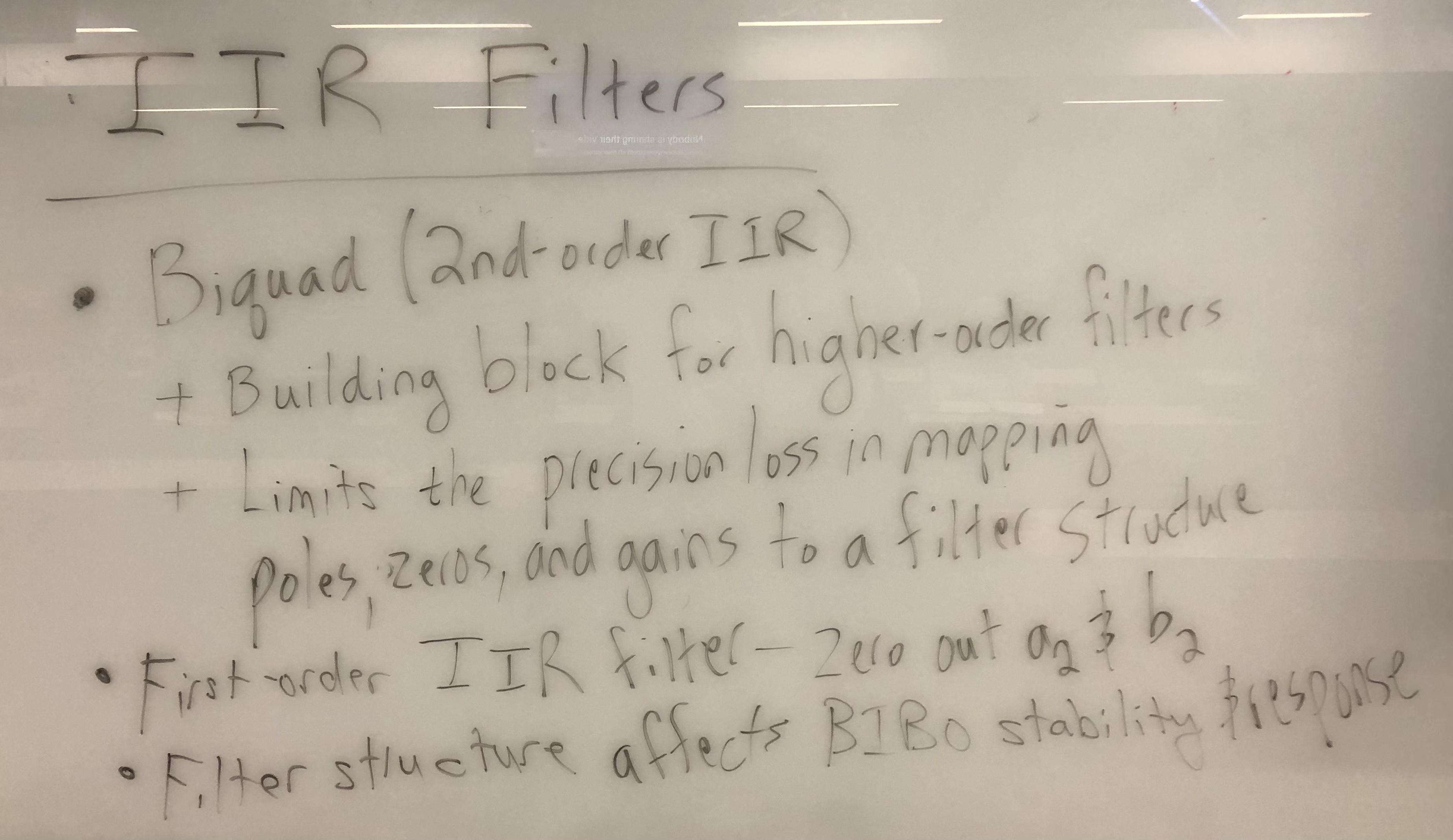
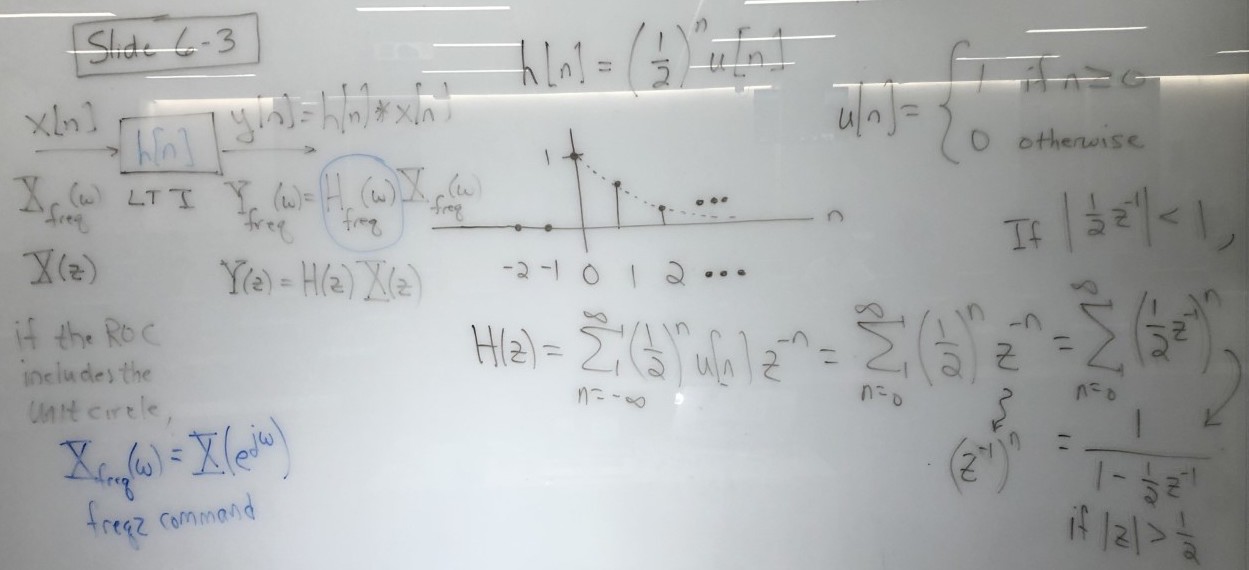
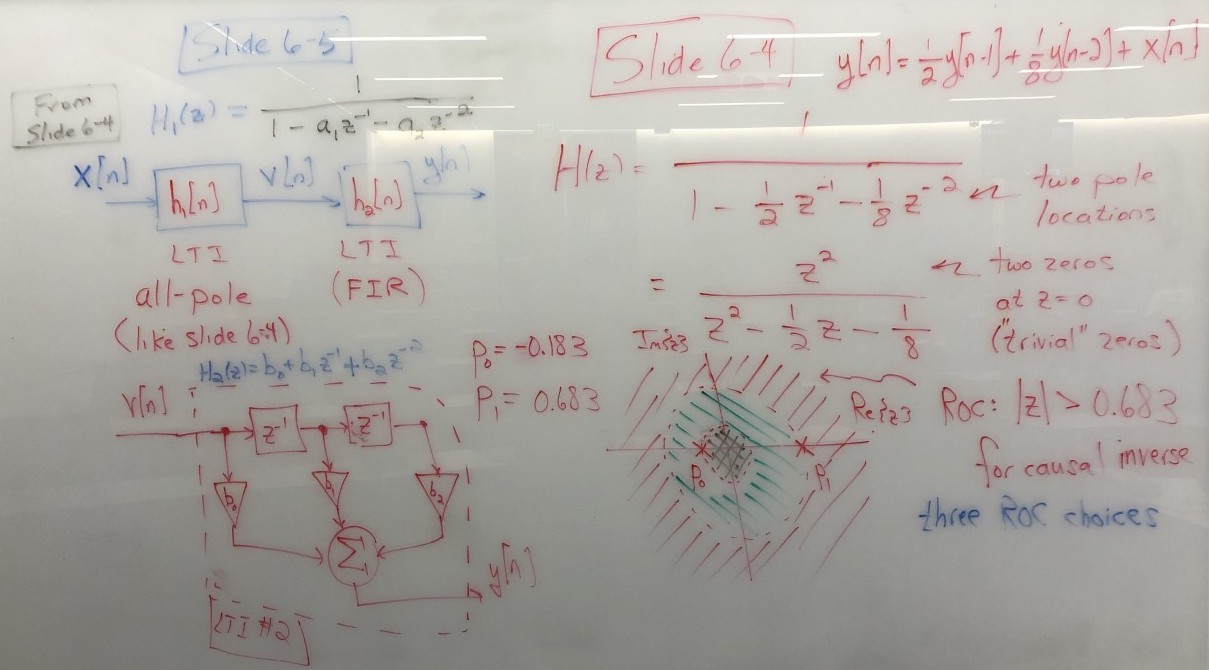
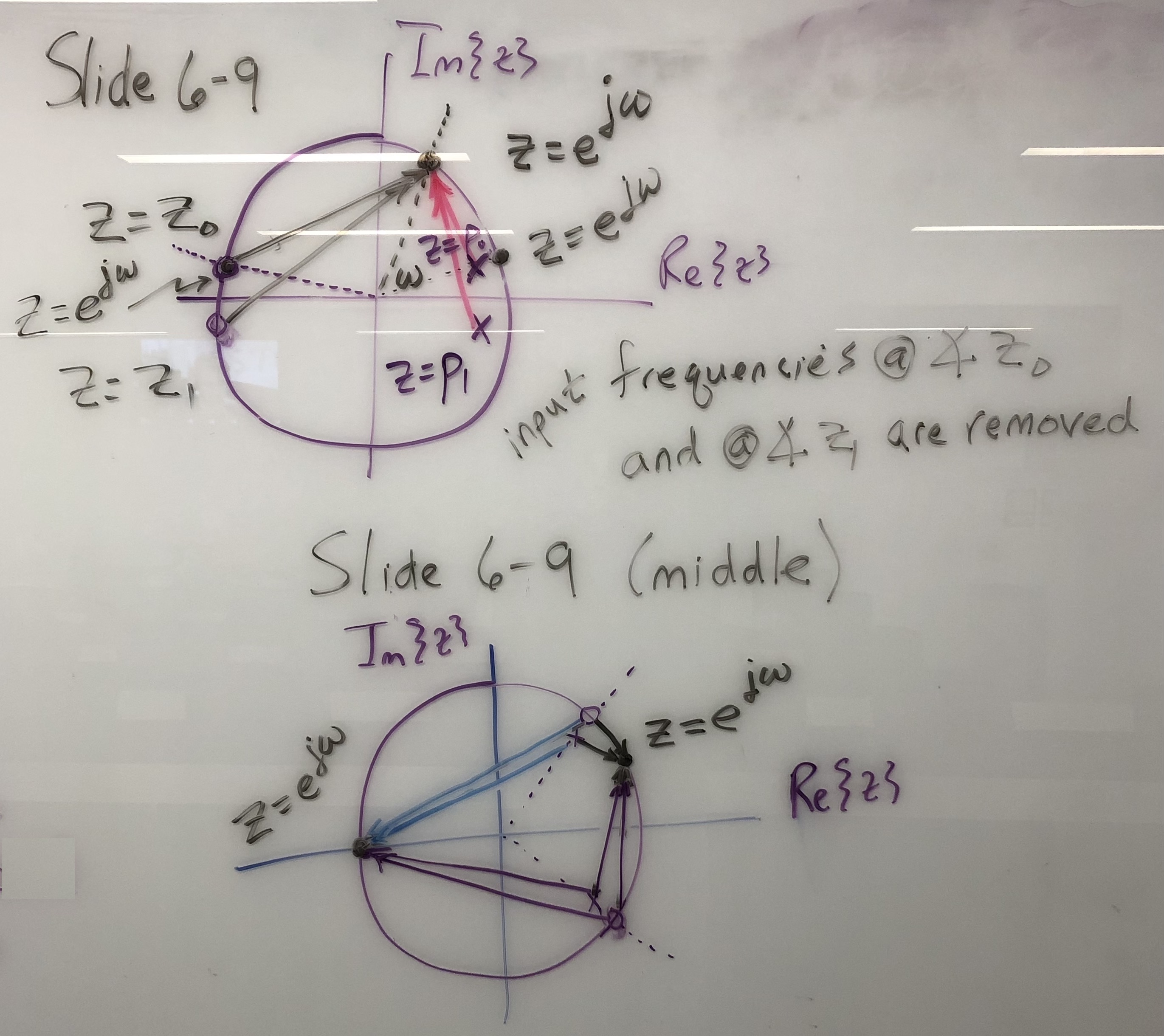
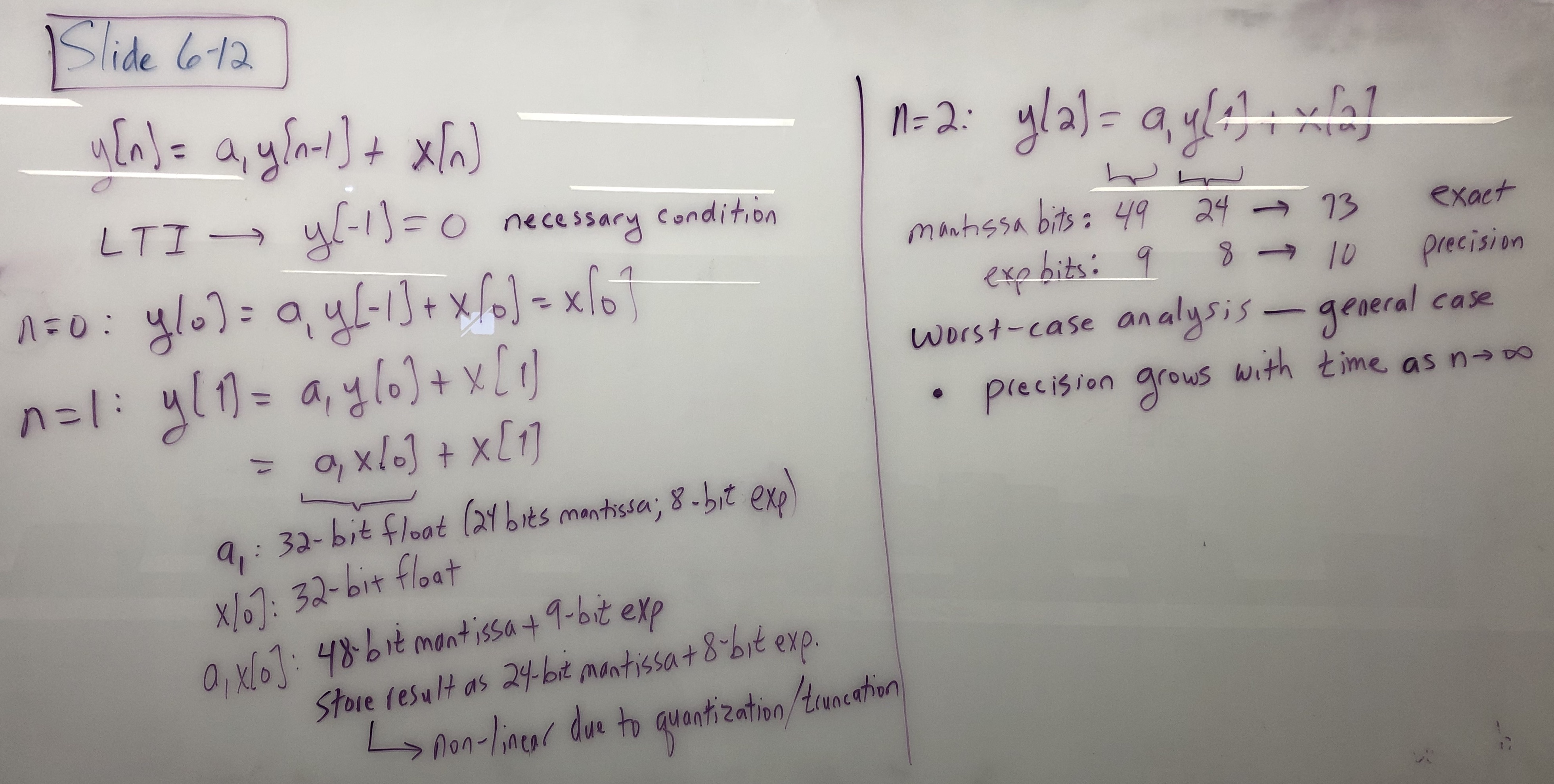
- Lecture on Infinite Impulse Response Filters is available in
PowerPoint format.
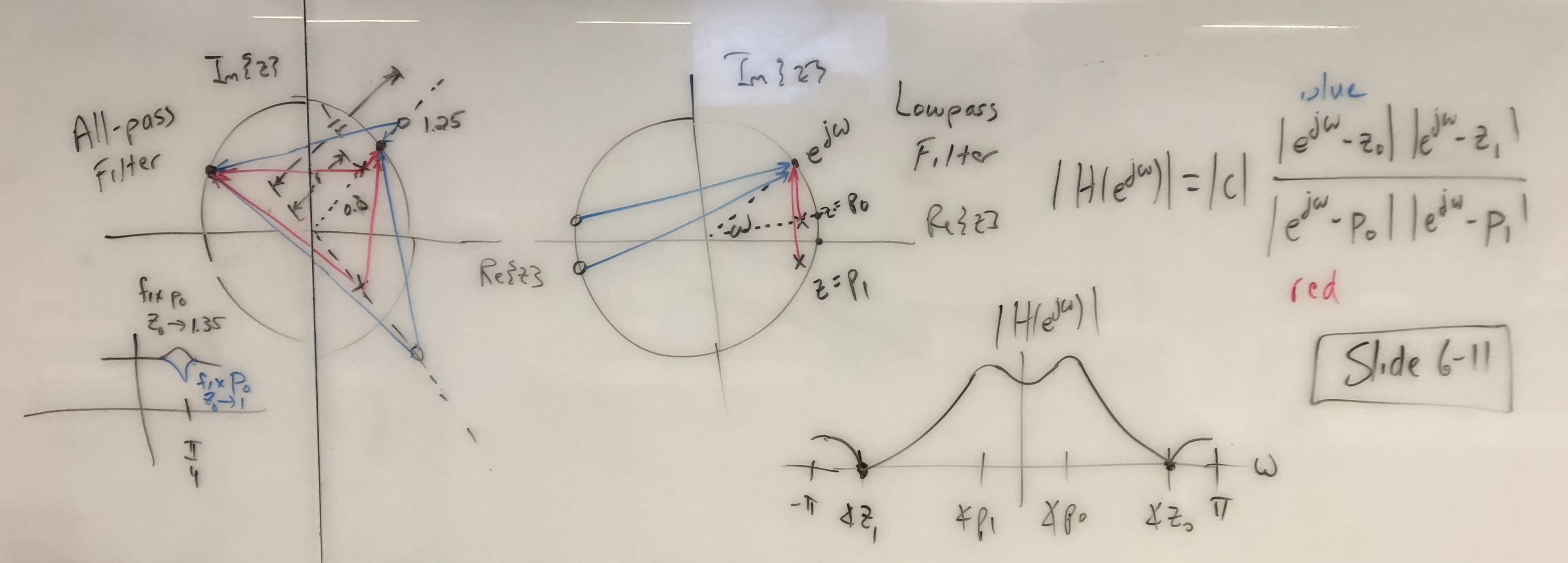
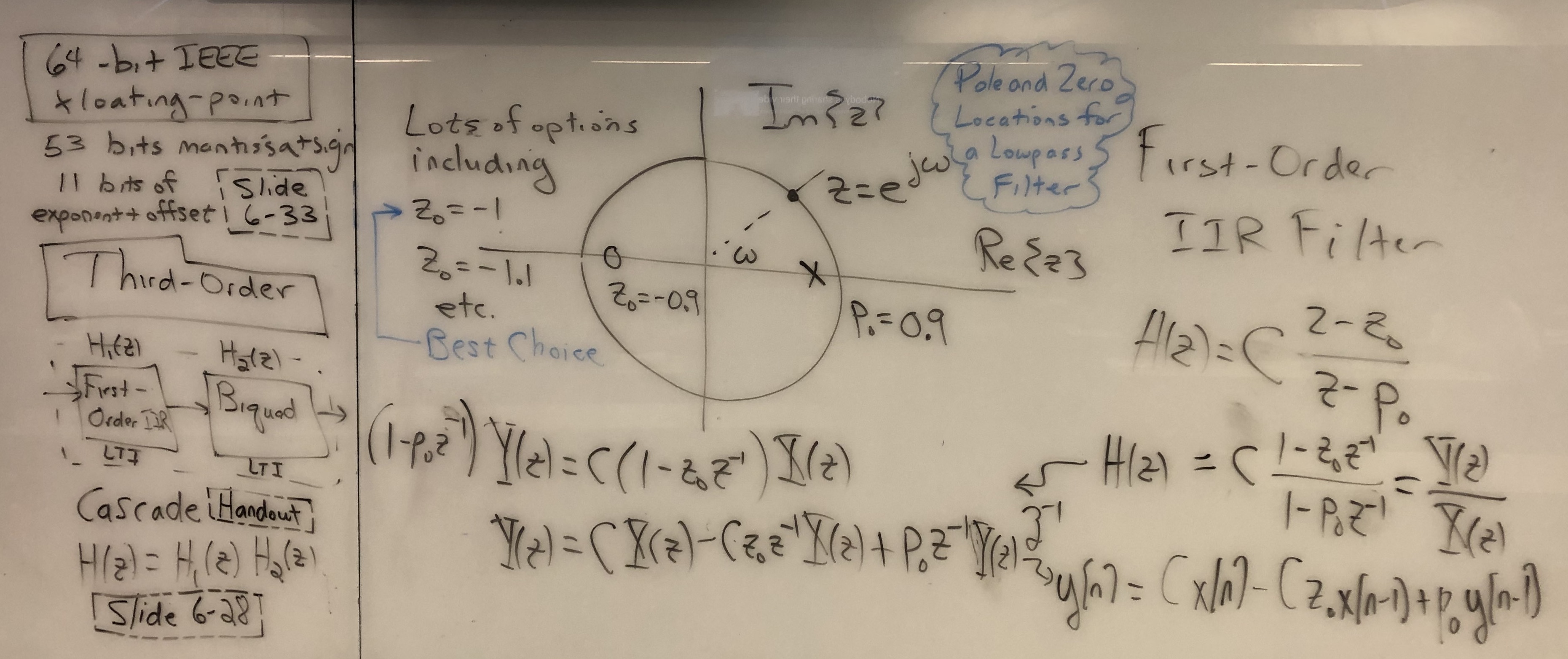
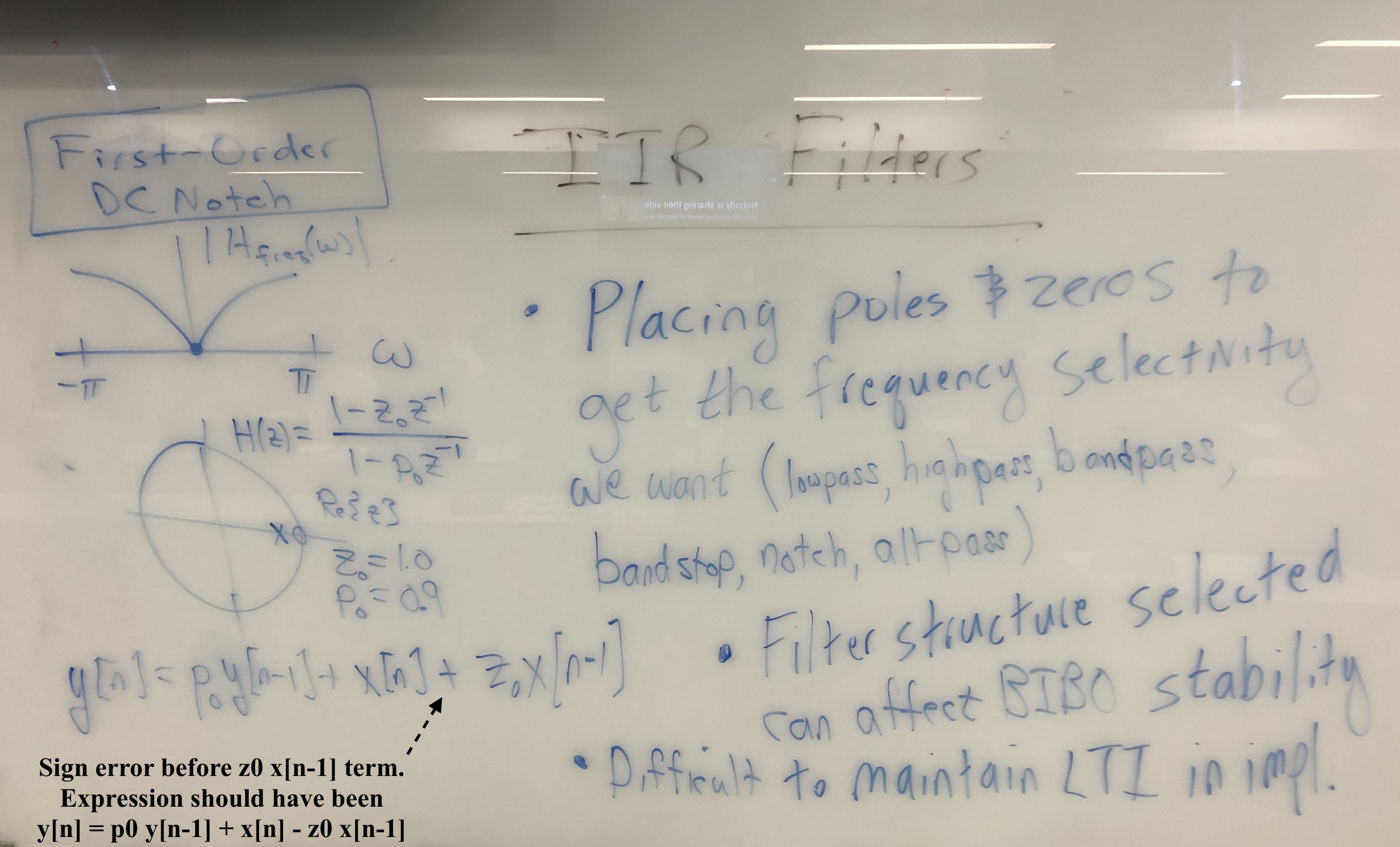
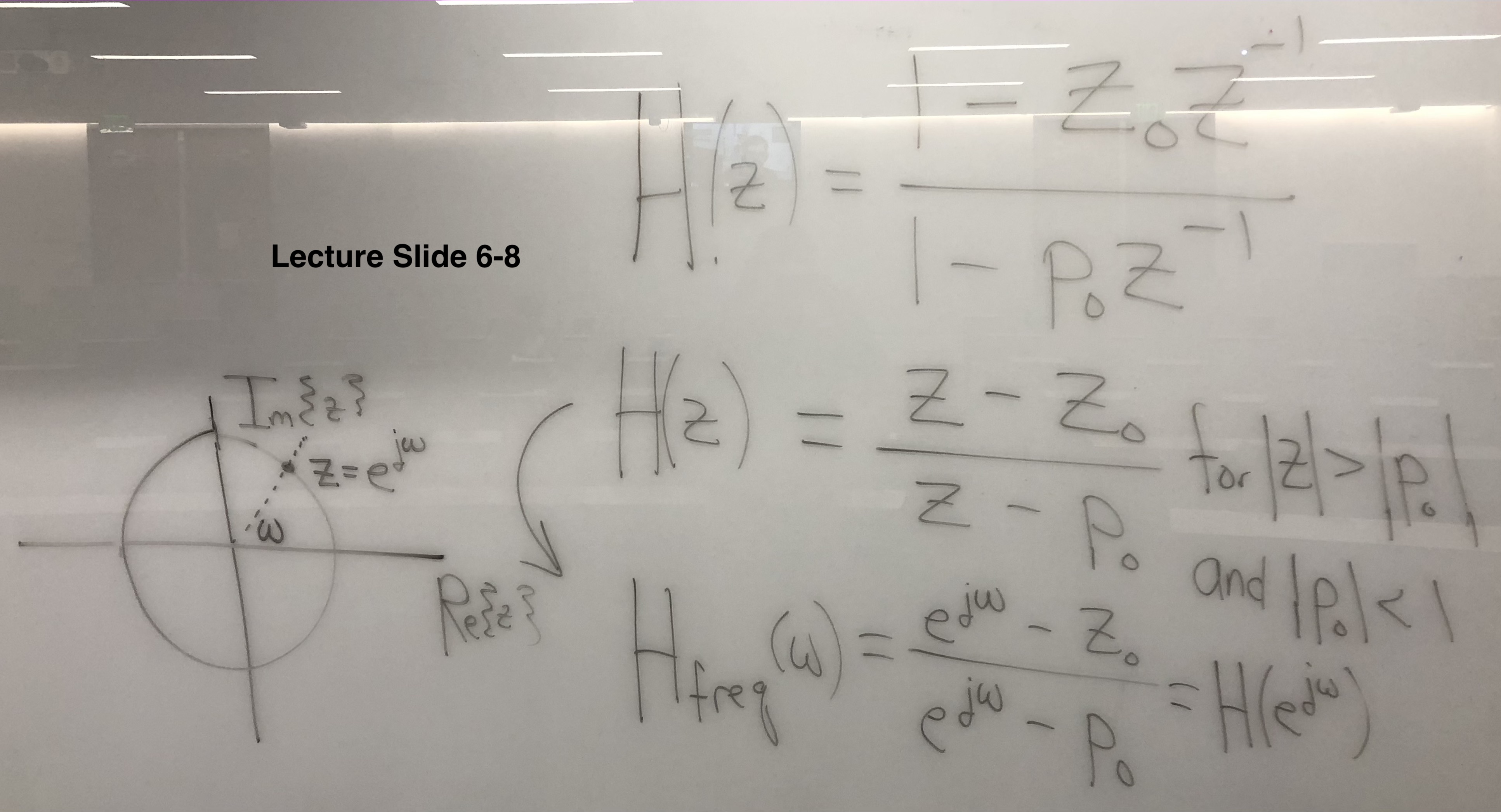
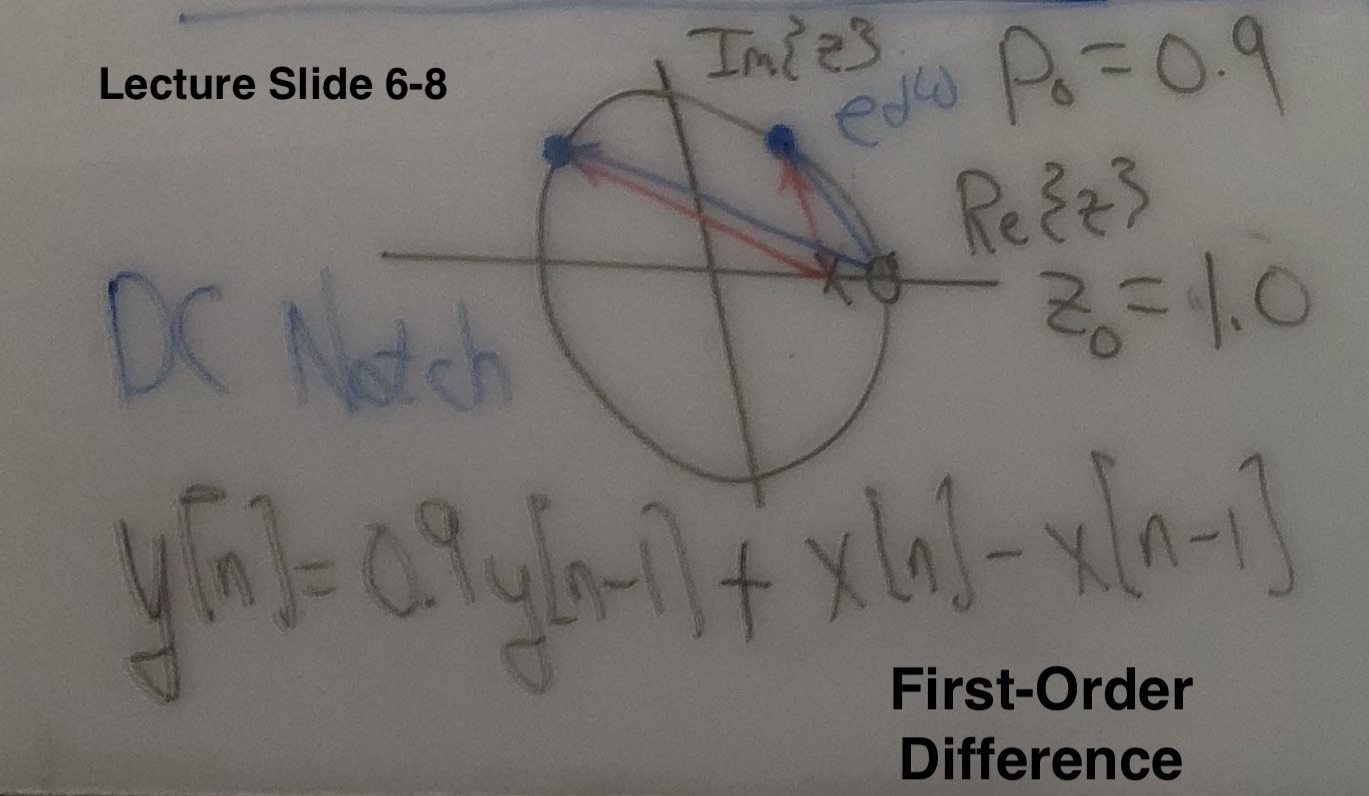
- Notch filters.
Lathi's Linear Systems and Signals, first edition,
example 5.13, pages 393-394.
- All-pass filters.
Appendix O in course reader.
- Appendix N "Tapped Delay Line on C6700 DSP" in course reader
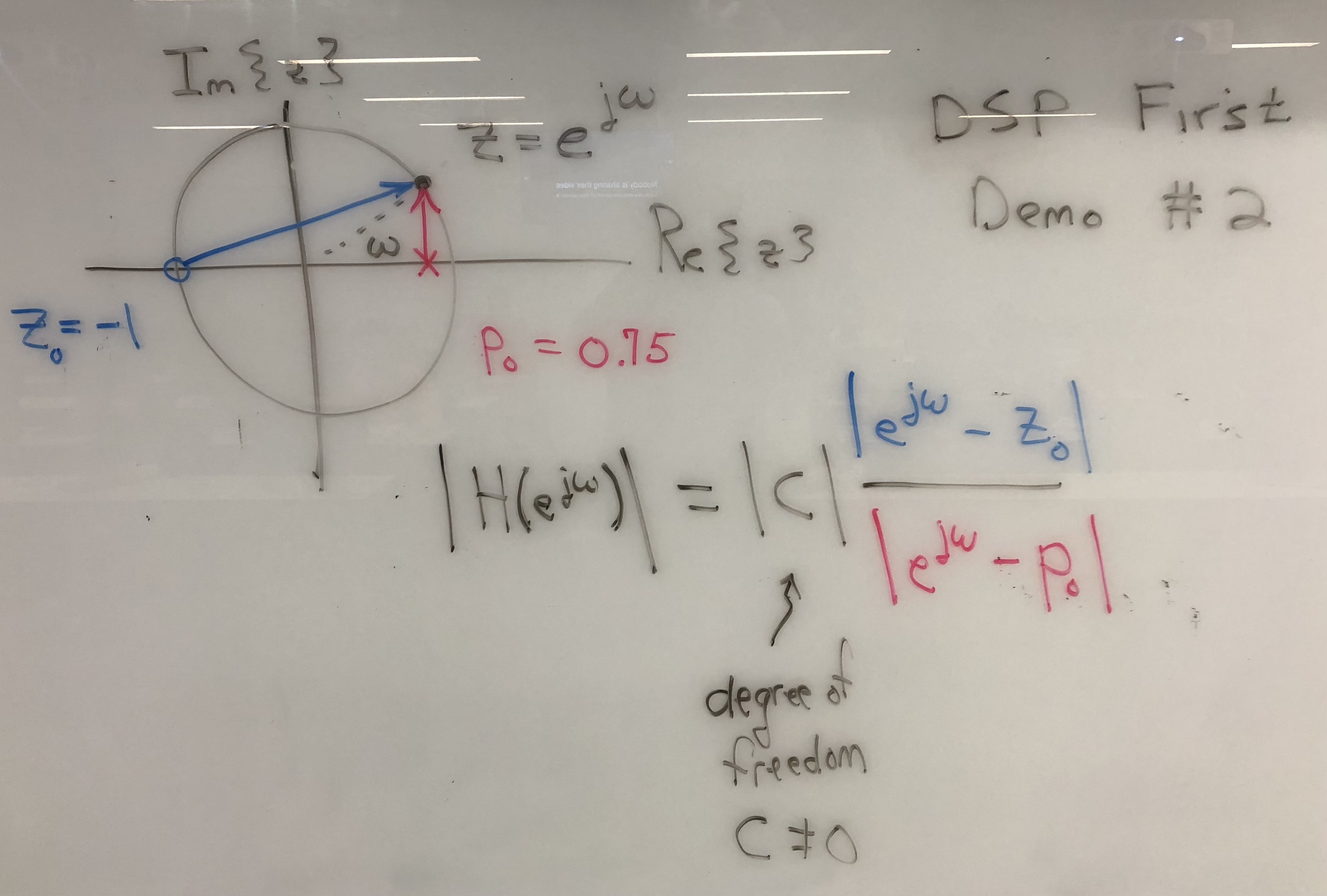
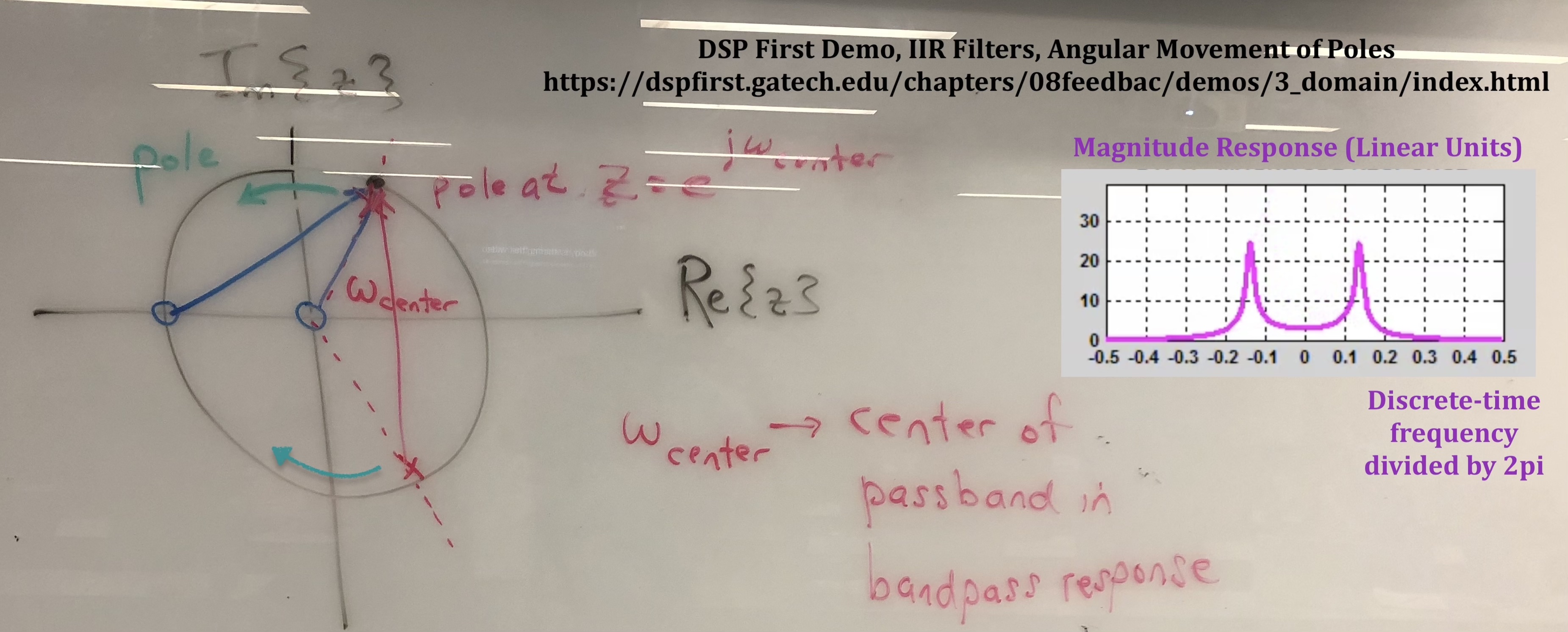
- Demonstrations from the book Signal Processing First.
- Demonstrations from Chapter 8 of the book
DSP
First: A Multimedia Approach
- Matlab
fdatool demonstrations for offline filter design
- Switch display to show magnitude response under Analysis menu
- Demonstrations below use default parameters unless otherwise noted
- FIR filter - equiripple
- Change order to 100 - stopband attenuation is about 85 dB
- Change order to 200 - increases stopband attenuation to about 155 dB
- Change order to 300 - filter design algorithm fails to converge - what to do?
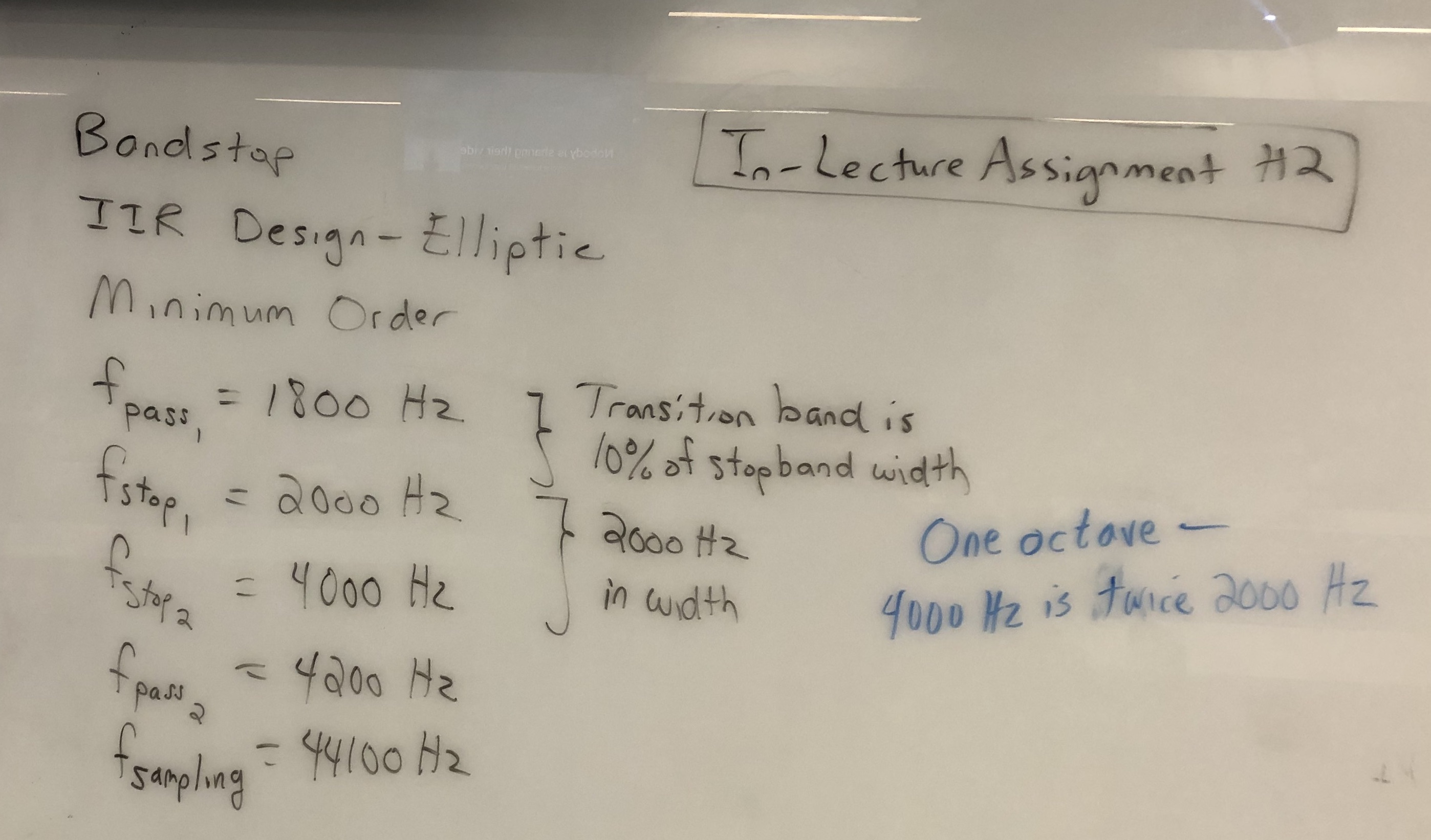
- IIR filter - elliptic design
- Filter order of 8 (second-order sections) meets specification
- Stopband attenuation about 80 dB
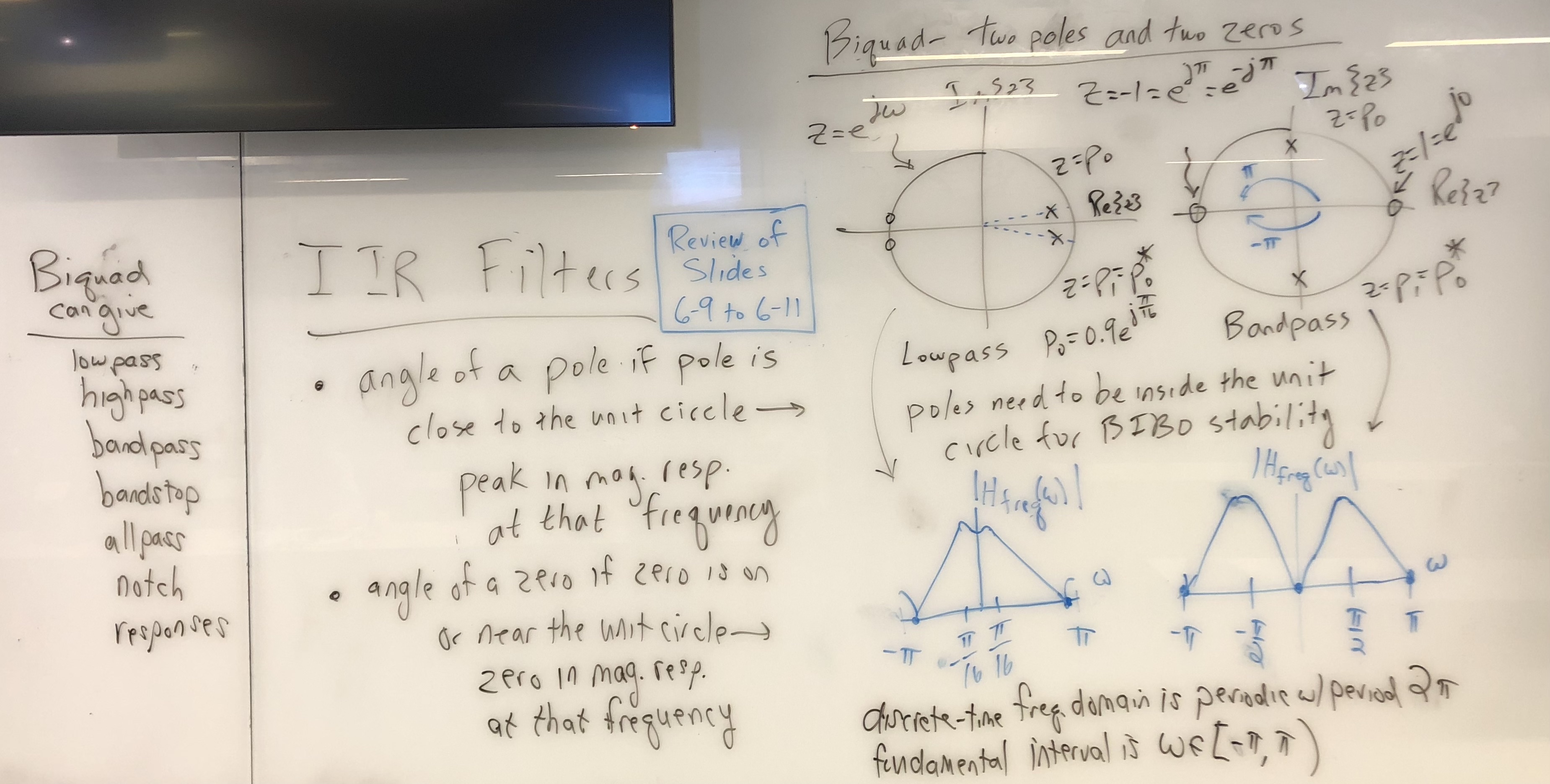
- Poles and zeros - separated in angle - zeros indicate stopband -
poles indicate passband - two poles very close to unit circle
- Increase filter order to 9 - eight complex symmetric poles and one real pole
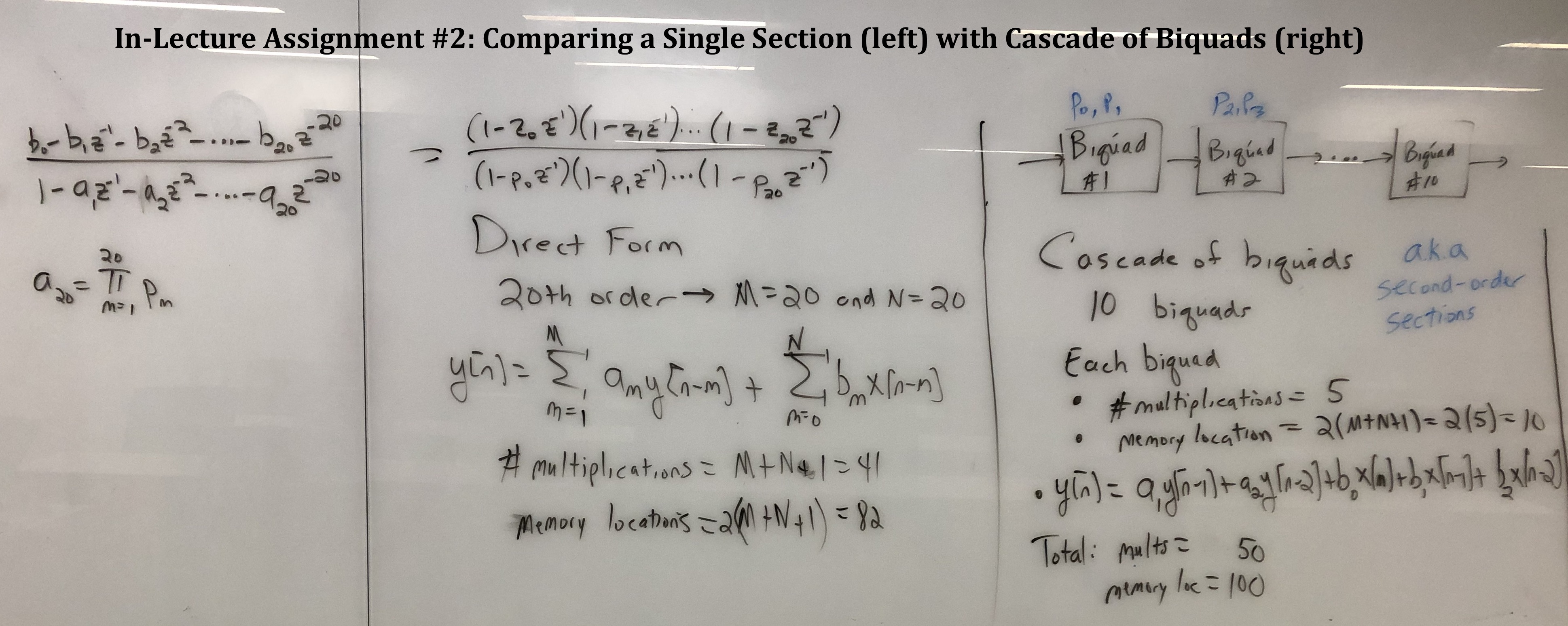
- IIR filter - elliptic design - 20th order
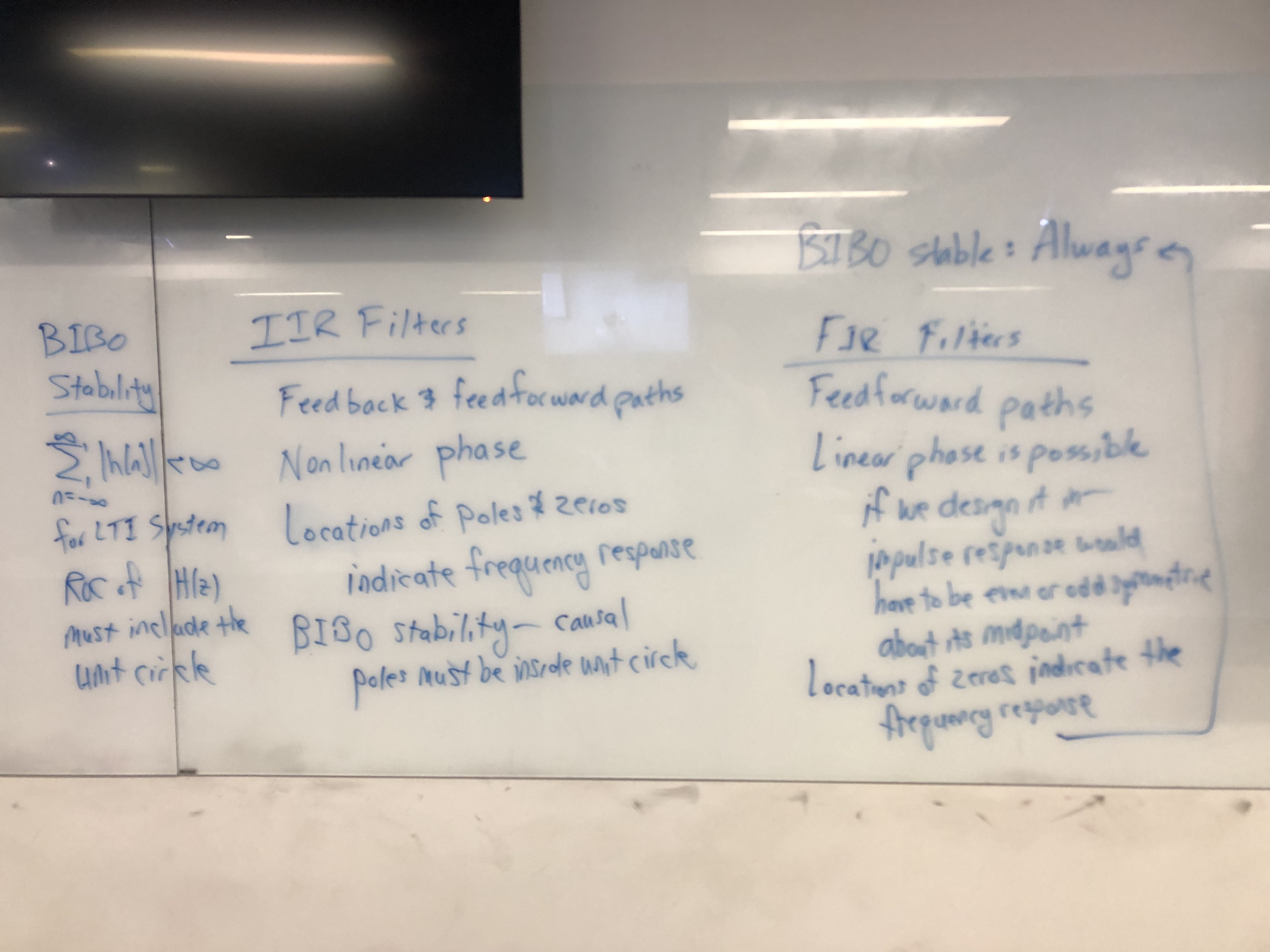
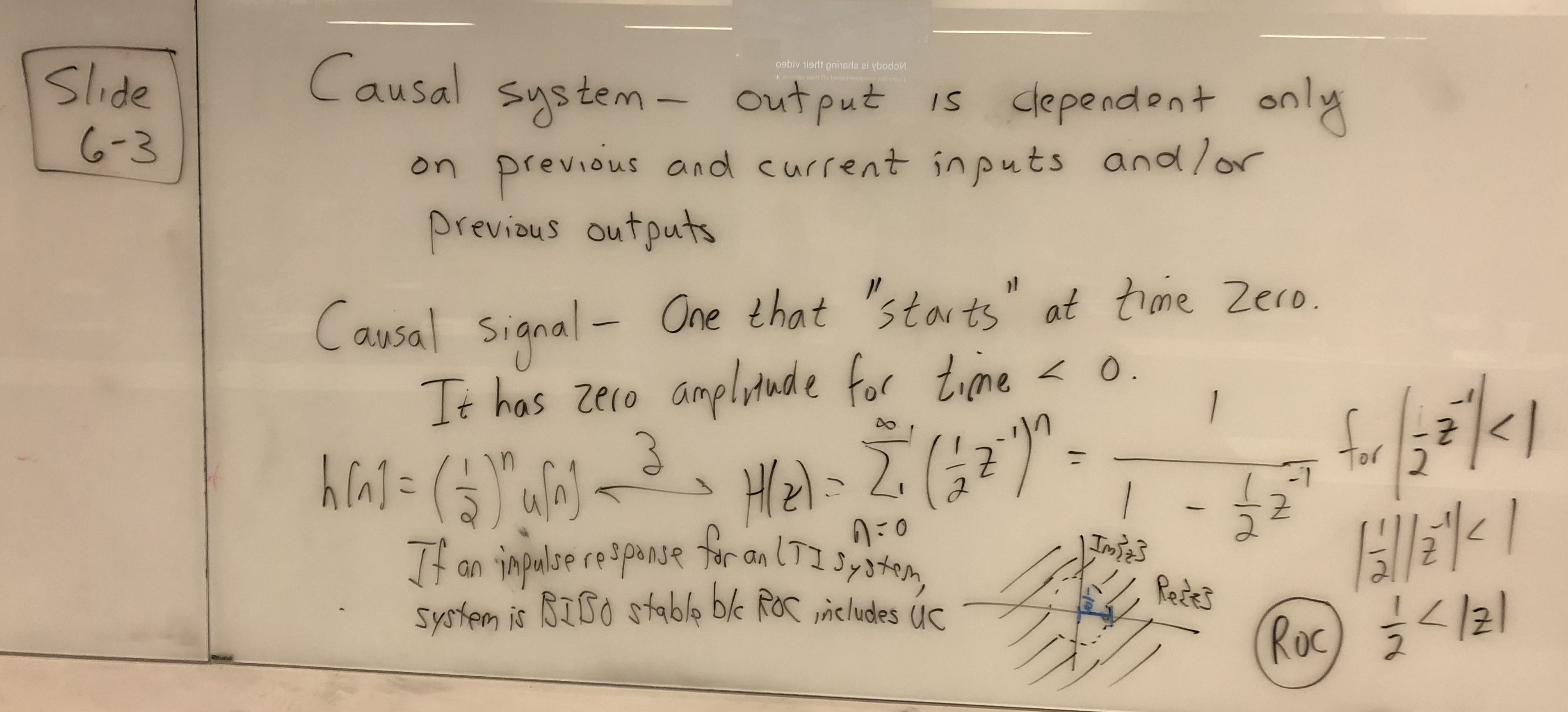
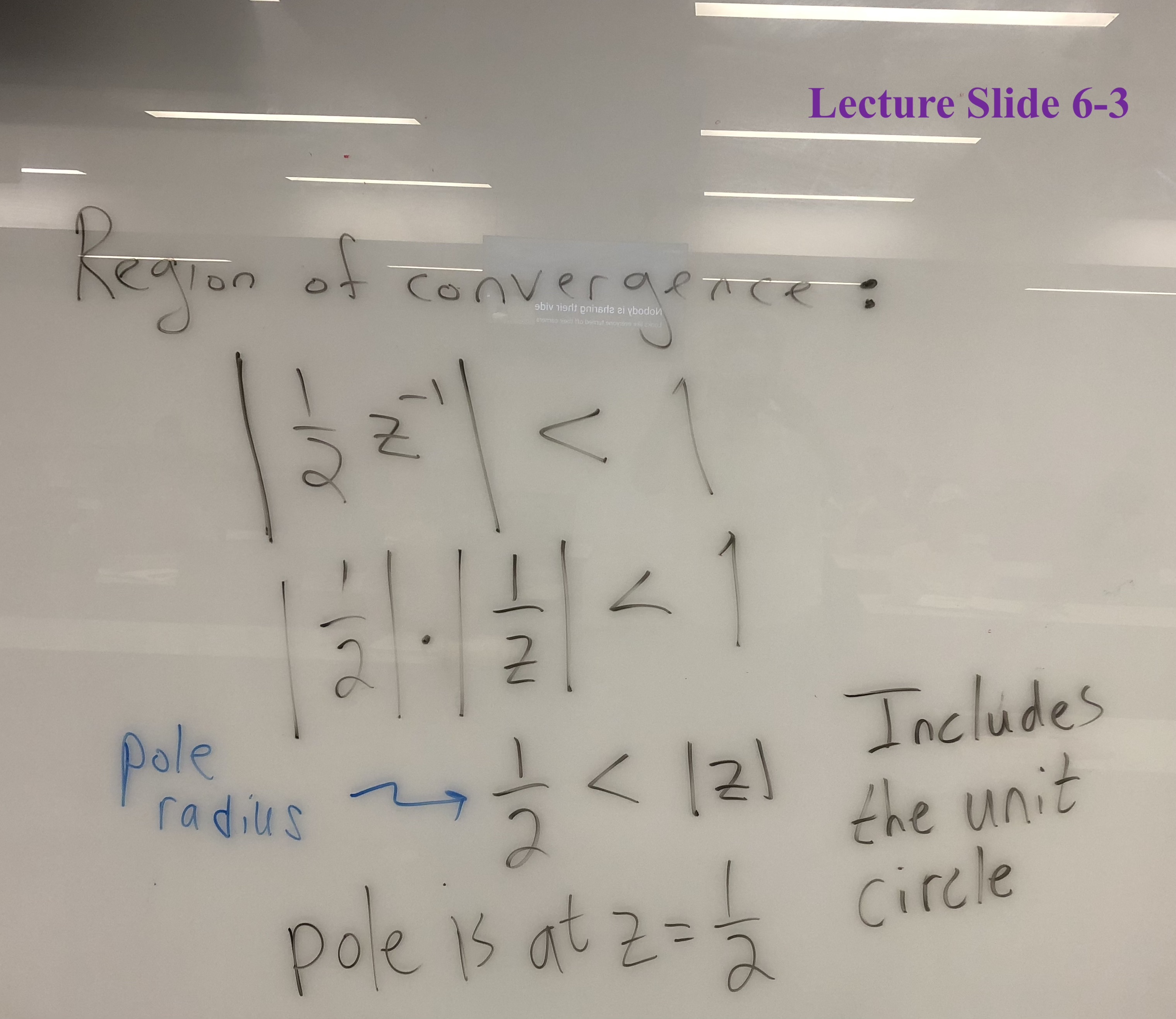
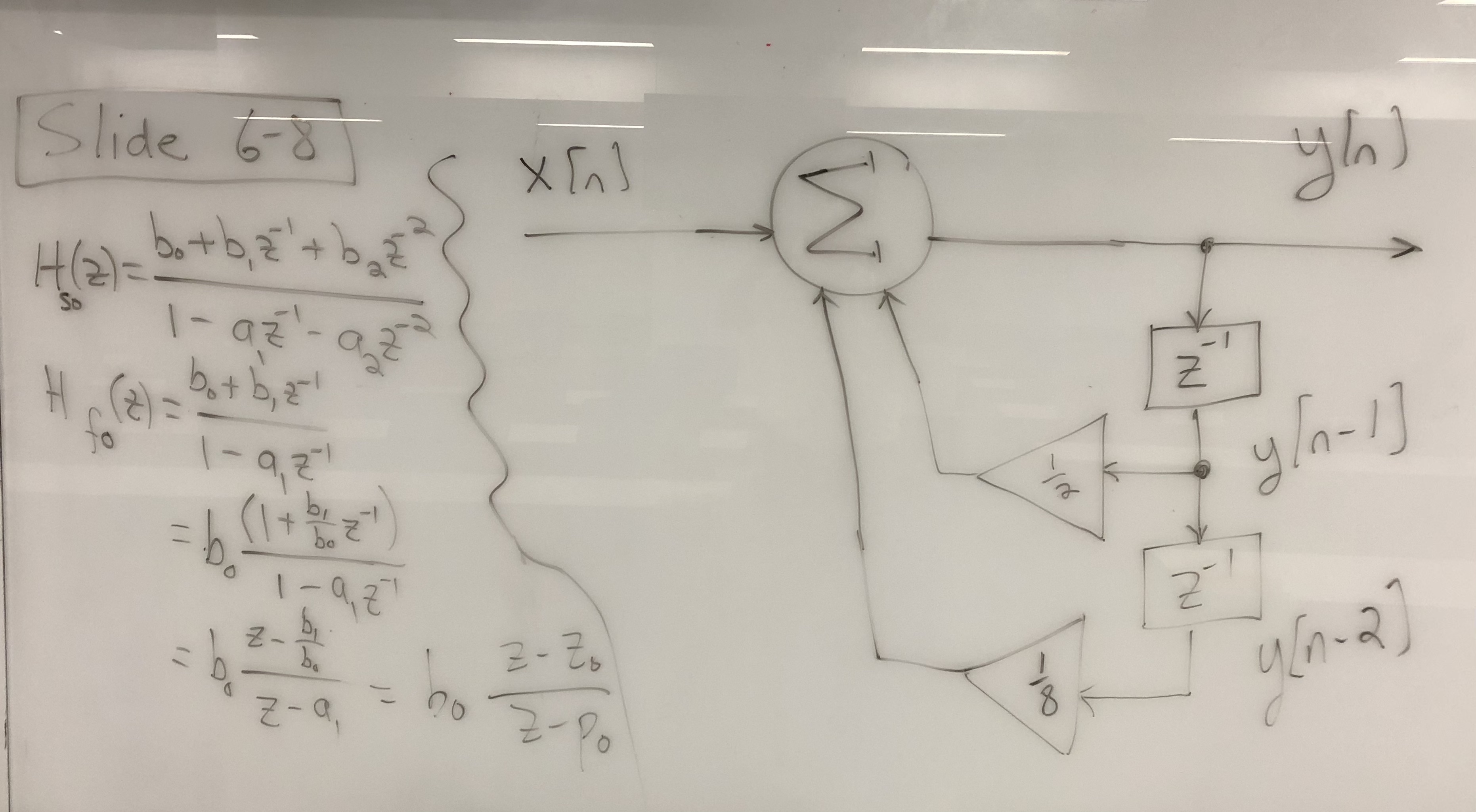
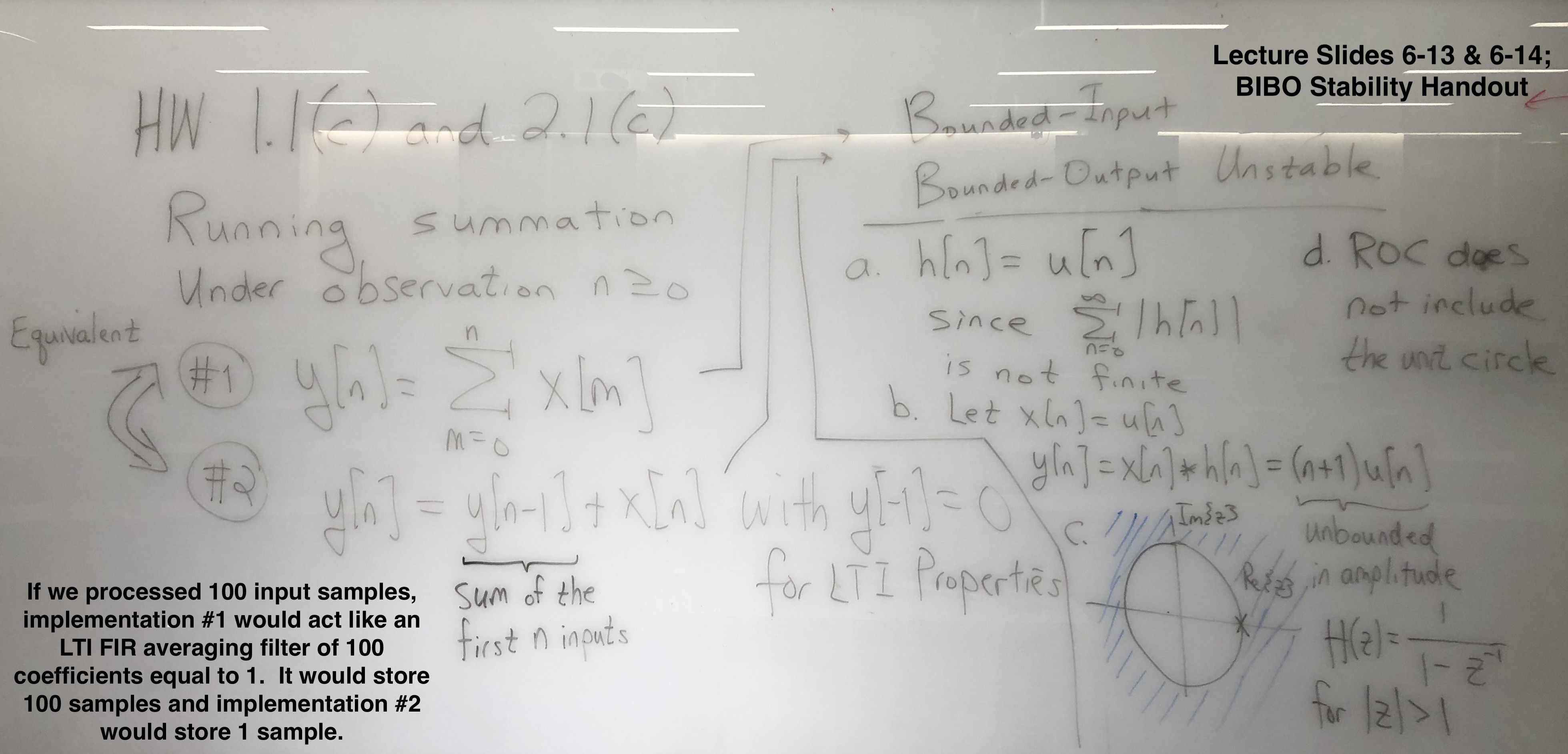
- Using second-order sections - two poles very close to unit circle but BIBO stable
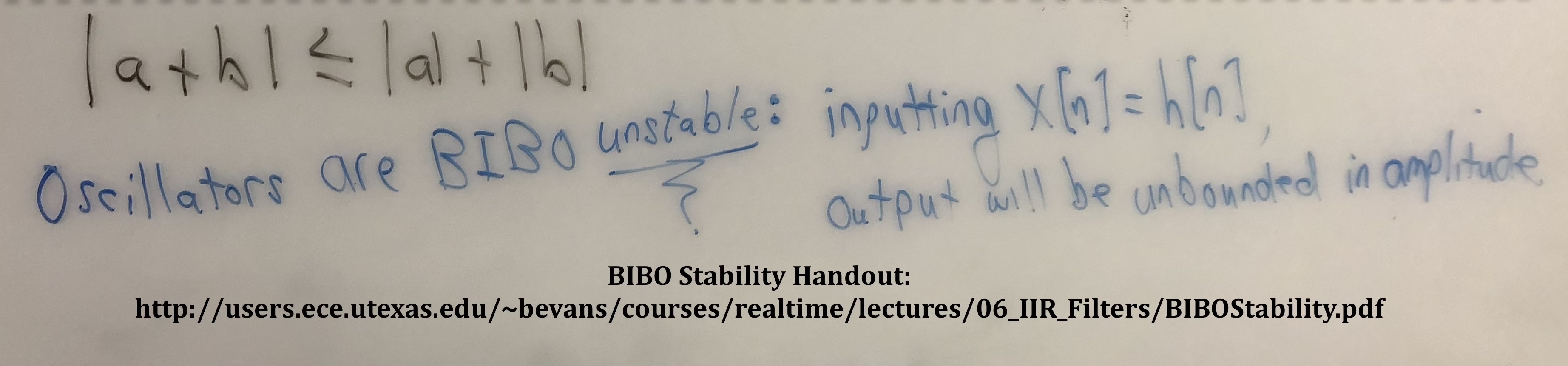
- Convert to Single Section (direct form) under Edit menu - BIBO unstable
- Oscillation frequency (around 9 kHz) appears in passband
- Two pairs of poles are outside unit circle
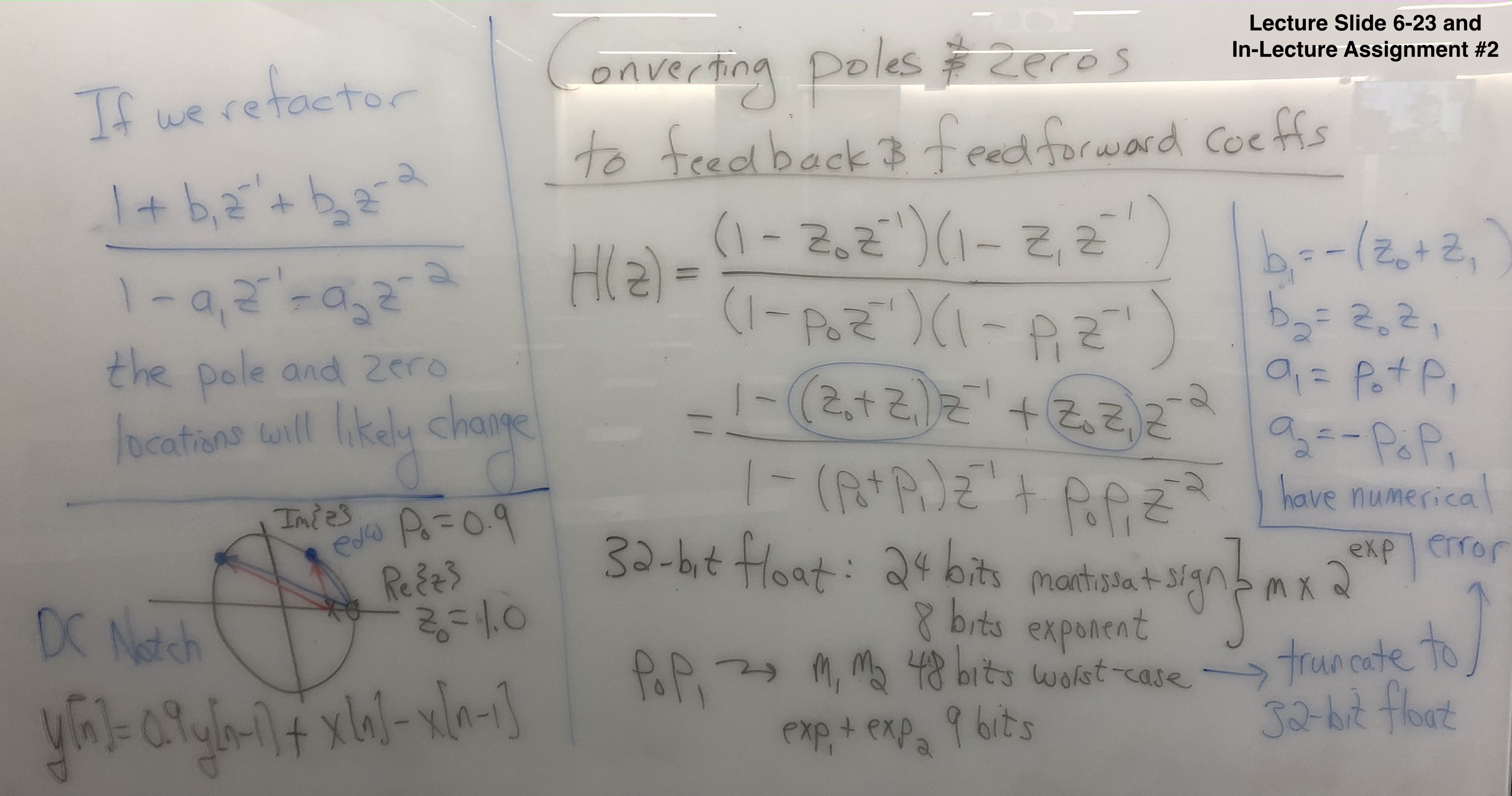
- IIR filter design algorithms return poles, zeroes and gain
- Impact on magnitude response of expanding polynomials
in transfer function from factored to unfactored form
- IIR filter - constrained least pth-norm design
- Limit pole radii to be less than or equal to 0.92 (default)
- Increase weighting in stopband (Wstop) to 5
- Filter order might increase but worth it for the most robust implementation
Supplemental Material
Last updated 03/03/13.
Send comments to
bevans@ece.utexas.edu